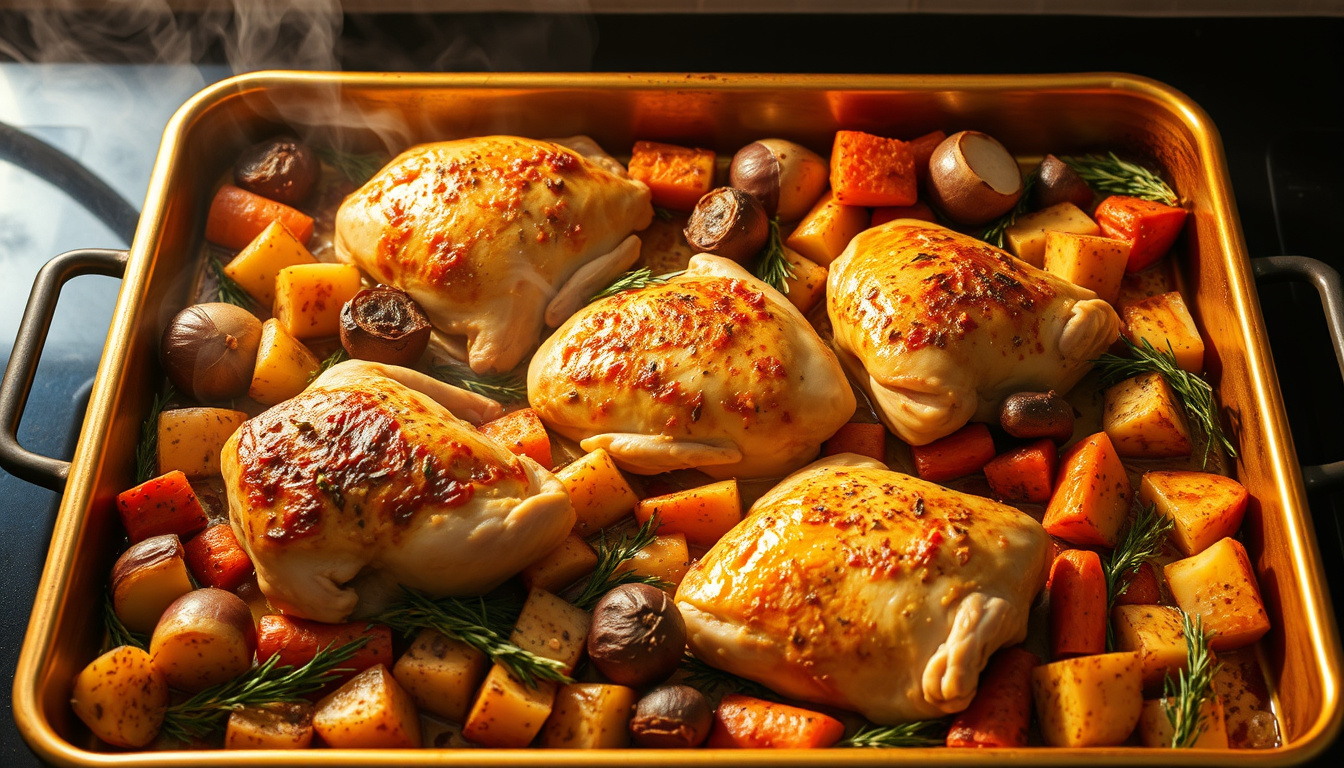
Chicken thigh tray bakes have become a staple of weeknight cooking, offering a straightforward approach to preparing a complete meal with minimal effort. These one-pan dishes combine bone-in chicken thighs with vegetables and potatoes, all roasted together on a single baking tray. The method requires just 5-15 minutes of preparation before the oven takes over, making it an attractive option for busy households seeking home-cooked meals without extensive cleanup.
The appeal of tray bakes extends beyond convenience. By cooking all ingredients together, flavors meld as vegetables caramelize and the chicken releases its natural juices onto the surrounding produce. This technique works equally well for simple lemon and garlic combinations or more elaborate Greek-inspired arrangements with feta and olives. Whether following a specific recipe or improvising with seasonal vegetables, the fundamental approach remains consistent: arrange components on a tray, season generously, and let the oven do the work.
How Do You Make Chicken Thigh Tray Bake?
The basic structure of a chicken thigh tray bake follows a predictable pattern that beginners can master quickly. Vegetables and potatoes are chopped into even pieces and arranged on a large baking tray with olive oil and seasonings. Chicken thighs, preferably skin-on and bone-in, are patted dry and placed on top or around the vegetables. Everything then roasts together in the oven, with the chicken fat rendering and basting the vegetables as it cooks.
Key Insights for Best Results
- Bone-in, skin-on thighs deliver superior flavor and moisture compared to boneless cuts
- Patting the chicken completely dry before roasting ensures crispy, golden skin
- Adding lemon or fresh herbs during the last 10 minutes prevents burning while maintaining bright flavors
- The single-pan method significantly reduces washing up and kitchen time
- Recipe quantities scale easily for meal preparation or larger gatherings
- Vegetables benefit from the rendered chicken fat, developing rich, caramelized edges
Nutritional Snapshot
| Fact | Details |
|---|---|
| Calories per serving | Approximately 450-512 kcal |
| Protein content | Around 30g per serving |
| Carbohydrates | Approximately 20g from vegetables |
| Key nutrients | Vitamin C, iron from chicken thighs |
| Diet adaptability | Suitable for keto and low-carb diets |
| Allergen profile | Gluten-free and dairy-free without cheese toppings |
How Long to Bake Chicken Thigh Tray Bake and Best Tips?
Oven temperatures for chicken thigh tray bakes typically range from 180°C to 210°C, with cooking times varying between 40 and 60 minutes depending on the specific recipe and equipment used. Most recipes achieve optimal results between 200°C and 210°C for approximately 45 minutes total. Some cooks prefer a two-stage approach, starting at a higher temperature for 20-30 minutes before reducing heat when vegetables are added.
Temperature Guidelines
Recipes consistently reference several temperature benchmarks for tray bakes. The Fuss Free Flavours honey mustard version specifies 180°C/160°C fan for 40-50 minutes. Alternatively, Beat the Budget’s lemon thyme recipe calls for 200°C/180°C fan with a 60-minute total cook time. Blue Sky Eating’s lemon and garlic variation uses 210°C/190°C fan for 45 minutes. These variations reflect different approaches to achieving similar results.
Achieving Crispy Skin
The quality of chicken skin often determines whether a tray bake succeeds. Cooks recommend patting thighs completely dry with paper towels before seasoning, as moisture prevents the skin from crisping properly. Using skin-on, bone-in thighs provides enough fat underneath to self-baste during cooking. Danielle Walker’s recipe emphasizes rotating the tray and tossing potatoes halfway through cooking to ensure even browning on all surfaces.
For exceptionally crispy skin, cover the tray with foil during the first 20-30 minutes of cooking, then remove the foil for the final portion. This traps steam to cook the chicken through while allowing the skin to dry and crisp once uncovered.
Ensuring Food Safety
Chicken must reach an internal temperature of 165°F (74°C) to be considered safe for consumption. The FDA’s color code guidelines and USDA cooking recommendations confirm this standard applies to all poultry preparations. Using a digital meat thermometer removes guesswork and ensures consistent, safe results.
What Vegetables and Variations for Chicken Tray Bake?
The vegetables chosen for a tray bake should share similar cooking times to ensure everything finishes together. Dense vegetables like potatoes and root vegetables require longer exposure to heat, while quicker-cooking items like tomatoes and leafy greens should be added later or placed in areas with less direct contact to the pan.
Recommended Vegetables
Standard vegetable additions span a wide range of options. Quiche My Grits and other recipe sources consistently feature baby or new potatoes, which hold their shape during roasting. Red onions, tomatoes, and courgettes provide color and texture. Bell peppers, artichoke hearts, and olives work particularly well with Mediterranean-inspired seasoning profiles.
- Baby or new potatoes
- Red onions
- Cherry or plum tomatoes
- Courgettes
- Bell peppers in various colors
- Artichoke hearts
- Olives
- Garlic cloves
Popular Flavor Combinations
Recipes fall into several distinct categories based on their seasoning approach. Lemon and garlic combinations pair baby potatoes, onions, and courgettes with citrus and optional garlic marinade. The lemon and thyme profile incorporates new potatoes, red onions, tomatoes, and fresh thyme sprigs.
Those seeking stronger flavors might consider the honey mustard glaze approach, which caramelizes beautifully during roasting. Greek-style variations, like Every Last Bite’s recipe, incorporate peppers, tomatoes, artichokes, olives, and feta cheese with garlic and oregano. For an Italian-inspired option, the BBC Good Food amatriciana tray bake combines bacon, tomato, and new potatoes.
Substituting Chicken Breasts
While thighs remain the preferred cut for their superior flavor and forgiveness during cooking, chicken breasts can substitute for those preferring white meat. However, breasts cook faster and dry out more easily, requiring careful monitoring and potentially shorter overall cooking times. Adjusting oven temperature or removing breasts before thighs prevents overcooking when using a mixed approach.
Chicken thigh tray bakes offer excellent value, with one recipe yielding five servings for approximately £1.38 total, or roughly 28p per serving. This affordability, combined with the minimal equipment required, makes tray bakes an economical choice for families seeking nutritious meals on a budget.
Is Chicken Thigh Tray Bake Healthy?
Chicken thigh tray bakes can form part of a balanced diet, offering significant protein content alongside vegetables and complex carbohydrates from potatoes. A typical serving provides approximately 30 grams of protein, supporting muscle maintenance and satiety. The fat content comes primarily from the chicken skin and any added oils, though much of this renders during cooking and some is absorbed by the vegetables.
Dietary Adaptations
The basic recipe naturally accommodates several dietary requirements. Tray bakes are naturally gluten-free and dairy-free when prepared without cheese toppings. For those following low-carb or ketogenic diets, simply reducing or omitting potatoes and increasing non-starchy vegetables makes the dish suitable. Nutrition information from Nutritionix indicates chicken thighs provide iron, B vitamins, and zinc in addition to protein.
Ready-made seasoning mixes, marinades, and preserved vegetables like olives can significantly increase sodium content. Those monitoring sodium intake should check labels on any pre-prepared ingredients and consider making homemade seasoning blends using herbs, spices, and citrus.
Balancing Nutritional Goals
The nutritional profile of a tray bake largely depends on ingredient selection and portion size. BBC Food’s chicken guide emphasizes that preparation method significantly impacts final nutritional content. Roasting preserves nutrients in vegetables better than boiling while allowing excess fat to render away. Adding a variety of colorful vegetables increases micronutrient density and fiber content.
Cooking Timeline
Understanding the sequence of events during a tray bake helps home cooks plan their time effectively and achieve consistent results.
- 0-10 minutes: Preparation and seasoning. Pat chicken dry, chop vegetables, coat everything with oil and seasonings.
- 10 minutes: Arrange on tray. Place vegetables first, then position chicken thighs on top or around the pan.
- 10-35 minutes: Initial roasting phase. Cook at higher temperature, optionally covered with foil.
- 35-40 minutes: Mid-cook intervention. Rotate tray, toss potatoes, baste chicken with released juices.
- 40-45 minutes: Final crisping phase. Remove foil if used, increase heat slightly for golden finish.
- 45 minutes: Check internal temperature. Verify chicken reaches 165°F before removing from oven.
- 50 minutes: Rest period. Allow dish to rest 5 minutes before serving for juices to redistribute.
Established Facts and Uncertainties
| Established Information | Variables and Uncertainties |
|---|---|
| Standard oven recipes use 180°C/350°F for 40-50 minutes | Actual times vary by individual oven calibration, potentially ±10% |
| Internal temperature of 165°F ensures food safety per USDA standards | Thigh size affects cooking time; smaller pieces cook faster |
| Patting chicken dry improves skin crispiness | Humidity in kitchen can affect final texture |
| Bone-in thighs provide better flavor than boneless | Personal preference varies; some prefer convenience over taste |
| One-pan cooking reduces cleanup time | Actual time saved depends on number of dishes normally prepared |
Why Chicken Thigh Tray Bakes Have Become Popular
The rise of tray bakes as a mainstream cooking method reflects broader changes in home cooking habits. University of Minnesota Extension resources note that simplified cooking techniques appeal to busy families seeking homemade meals without extensive kitchen time. The approach aligns with the ethos promoted by British chefs like Jamie Oliver, who championed “throw-it-all-together” recipes that minimize complexity while maximizing flavor.
Chicken thighs specifically gained favor over breasts because they offer more forgiving cooking windows. Breasts dry out quickly when overcooked, while thighs retain moisture and develop deeper flavor during extended cooking. This practical advantage, combined with typically lower prices per pound, makes thighs the economical choice for weeknight cooking.
Expert Perspectives
“Throw-it-all-together tray bakes are game-changers for busy home cooks who want incredible flavor without spending hours in the kitchen.”
Jamie Oliver, British Chef and Food Advocate
“Cook all poultry to an internal temperature of 165°F to ensure harmful bacteria are eliminated. A digital thermometer provides the most reliable reading.”
United States Department of Agriculture Food Safety Guidelines
“Skin-on, bone-in chicken thighs deliver unmatched juiciness compared to trimmed cuts. The bone conducts heat evenly while the skin renders fat and creates that desirable crispy texture.”
Testing Notes from BBC Good Food Kitchen
Summary
Chicken thigh tray bakes represent a practical approach to weeknight dinner, combining minimal preparation with satisfying results. The technique works with countless flavor profiles and vegetable combinations, making it adaptable to seasonal ingredients and personal preferences. With proper attention to internal temperature and skin preparation, even novice cooks can achieve restaurant-quality results at home. The affordability and flexibility of this cooking method explain its enduring popularity across households looking for dependable, home-cooked meals.
Frequently Asked Questions
Can I make chicken thigh tray bake ahead of time?
Components can be prepped in advance by chopping vegetables and storing them separately from raw chicken. The assembled tray can go straight from refrigerator to oven, though cooking time may increase by 5-10 minutes. Cooked leftovers store well in the refrigerator for up to three days.
What if I do not have chicken thighs, can I use drumsticks?
Drumsticks work well as a substitute and follow similar cooking times. They offer built-in handles that some find easier to serve. Adjust quantities based on the total weight, aiming for approximately the same weight as the original thigh recipe.
Can I freeze leftover chicken tray bake?
The dish freezes successfully for up to three months when stored in airtight containers. Potato texture may change slightly upon thawing and reheating. Reheat thoroughly until internal temperature reaches 165°F before consuming.
Are there dairy-free and gluten-free options?
Standard chicken thigh tray bakes are naturally dairy-free and gluten-free when prepared without cheese toppings or marinades containing wheat-based ingredients. Always check seasoning labels to confirm gluten-free status for any pre-made spice blends.
What oven temperature works best for crispy skin?
Higher temperatures between 200°C and 210°C (400°F) generally produce crispier skin. Starting uncovered or removing foil halfway through cooking helps dry out the skin. Ensuring the chicken is completely dry before seasoning also contributes significantly to crispiness.
Can I adapt the recipe for an air fryer?
Air fryer adaptations exist but require reduced cooking times and potentially smaller quantities. Most air fryer recipes suggest 15-20 minutes at 200°C for chicken thighs alone, with vegetables added in a separate basket or cooked afterward.

Oliver Bennett is Managing Editor at WordPatch.co.uk, running the daily news list, the publishing schedule and the submissions workflow.