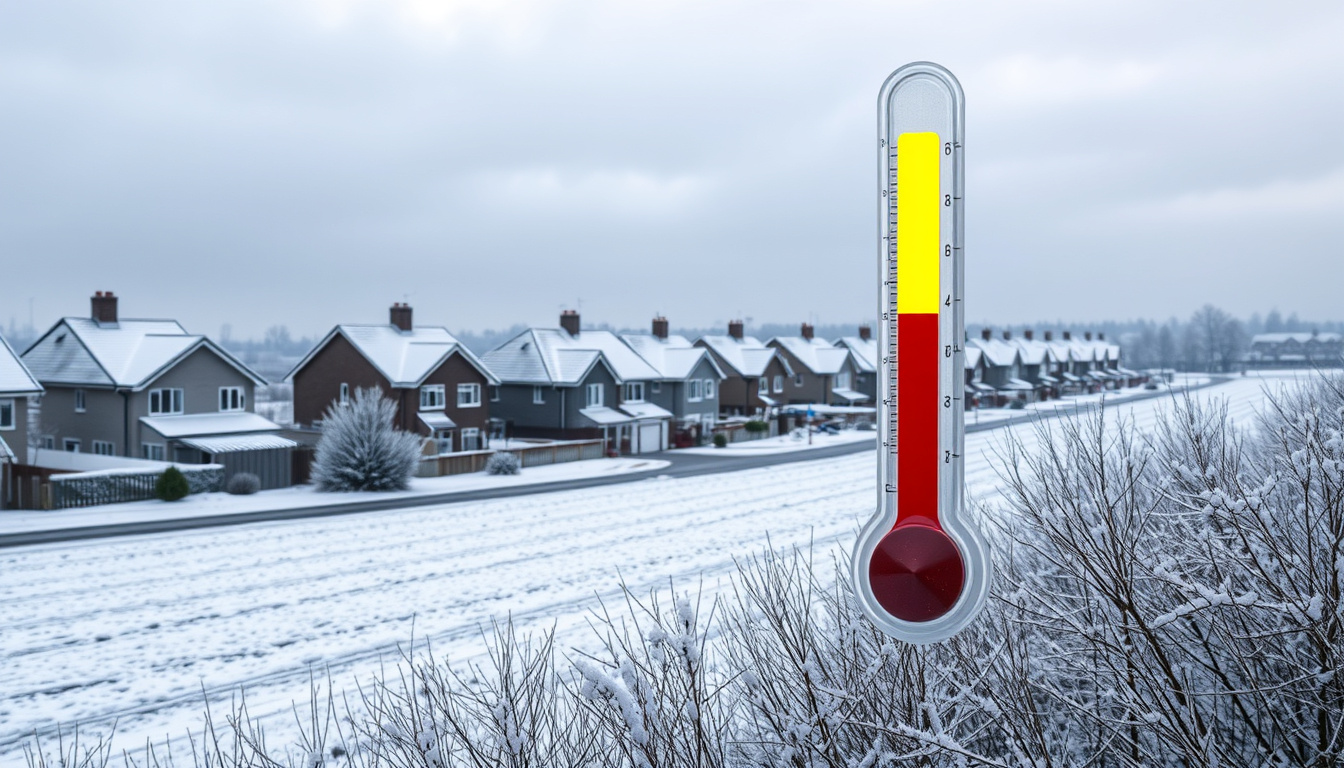
If you live in England, Wales, or Northern Ireland, a cold snap could put £25 in your pocket — automatically. The Cold Weather Payment scheme exists to help people on certain benefits cover extra heating costs during severe winter weather, and checking whether your postcode has triggered a payment is simpler than most people realise.
Standard payment rate: £25 per 7-day cold period · Eligibility period: 1 November to 31 March · Trigger temperature: Average <0°C in area · Official checker: Postcode-based on GOV.UK · Northern Ireland checker: Available on nidirect.gov.uk
Quick snapshot
- 2026 Fuel Allowance amount for future seasons
- Whether a dedicated mobile app will be developed
- Full trigger history for all England/Wales postcodes
- Scheme runs 1 Nov 2025 – 31 Mar 2026
- NI Katesbridge triggered 31 Dec 2025 – 6 Jan 2026
- Payments issued within 14 working days of trigger
- Check your postcode after each cold spell
- Payments arrive automatically if eligible
- Report life changes via benefits journal
The table below summarises the key Cold Weather Payment scheme parameters for the 2025-26 season.
| Field | Value |
|---|---|
| Payment amount | £25 per qualifying week |
| Season | 1 November – 31 March |
| Main qualifier | Pension Credit or certain benefits |
| Checker URL (England & Wales) | gov.uk/cold-weather-payment |
| NI checker | nidirect.gov.uk/services/cold-weather-payment-checker |
Do I qualify for cold weather payment in my area?
Eligibility depends on two things working together: receiving a qualifying benefit AND living in a postcode area that has recorded seven consecutive days at or below freezing. According to the official GOV.UK eligibility guidance, you do not need to apply — payments are automatic for those who meet both conditions.
Qualifying benefits
Several benefits trigger eligibility, and they fall into three broad groups:
- Pension Credit — most straightforward qualifier; recipients in England, Wales, or NI are usually eligible unless residing in a care home
- Income-related ESA, Income Support, or income-based JSA — require one of these add-ons: disability premium, disabled child amount, child under 5, or relevant Child Tax Credit
- Universal Credit — eligible if not gainfully self-employed, AND meeting one of: limited capability for work, child under 5 in the household, or disabled child amount
- Support for Mortgage Interest (SMI) — mirrors the qualifying benefit criteria, including disability-related premiums
Temperature triggers
The scheme activates when the average temperature in your postcode area drops to 0°C or below for seven consecutive days, either recorded or forecast. According to GOV.UK’s official scheme page, this means different areas trigger at different times depending on local weather — there is no fixed national payment date. The pattern is local: one postcode may trigger while a neighbouring one does not.
Postcode checker steps
For England and Wales, use the GOV.UK postcode checker; for Northern Ireland, use the nidirect checker. Both tools ask for your postcode (the first half, such as “CO1” or “BT24”, is sufficient) and display whether a payment has been triggered for your area. The Uswitch comprehensive guide notes that checkers also show how many payments have been made and their dates.
Cold Weather Payment: Rate, Eligibility & How to Claim
The current payment rate is £25 for each seven-day period of qualifying cold weather. This is a fixed amount set by the Department for Work and Pensions, not a reimbursement system — you receive £25 per qualifying week regardless of your actual heating expenditure. The scheme runs from 1 November 2025 to 31 March 2026, and payments are made within 14 working days after a cold period ends, as confirmed by the nidirect payment guidance.
Current rate details
Each qualifying cold period — defined as seven consecutive days at or below 0°C — generates one £25 payment. Multiple cold spells during the season mean multiple £25 payments. As stated by Age UK’s benefit guide, the scheme is designed to help people on low incomes manage the extra cost of staying warm during winter. These payments do not affect other benefits and are not repayable.
Full eligibility criteria
Beyond the qualifying benefits listed in the previous section, there are some specific situations worth noting. Care home residents who receive Pension Credit are not eligible for Cold Weather Payments, per Age UK’s benefit guide. Hospital stays can affect eligibility — if you’re in hospital for an extended period, notify your benefits office. If your circumstances change (a new baby, a child under 5 joining the household, or a new disability), report this through your Universal Credit journal, as this may affect your eligibility going forward.
Universal Credit recipients who are gainfully self-employed — defined by GOV.UK eligibility page as having regular work and profit expectation in their main job — do not qualify unless they also meet the child, health, or disability criteria. This catches a significant number of self-employed claimants who assume they are covered.
Claim process
In most cases, you do not need to claim at all. Payments are automatic for eligible recipients, paid into the same account where you receive your other benefits. If you believe you qualify but have not received a payment, contact the relevant helpline: the Uswitch guide cites the Universal Credit helpline at 0800 328 5644, while Age UK benefit guidance references an alternative number of 0800 328 9344 for specific issues.
When will the Cold Weather Payment be paid?
Payment timing follows a predictable pattern: after your postcode area records the required seven consecutive days at or below freezing, you receive the £25 within 14 working days. This window is confirmed by nidirect’s official NI payment page, and it means there is typically a short delay between the cold weather ending and funds appearing in your account.
Payment timing
The scheme does not operate on a fixed national schedule. Instead, it responds to local weather data from the Met Office weather stations serving each postcode area. When the threshold is met, DWP initiates payment automatically — no action required from you.
Trigger periods
A concrete example comes from Northern Ireland, where cold weather payments were triggered for the Katesbridge area (postcodes BT24 to BT26 and BT30 to BT34) from 31 December 2025 to 6 January 2026, as documented on nidirect. This shows that even a single week-long cold spell during the Christmas/New Year period can qualify — and that the system is actively monitoring and paying out during the current season.
Historical examples
Looking back at previous winters helps calibrate expectations. The Uswitch guide confirms that the scheme has operated in this form for multiple years, with varying numbers of trigger events depending on regional winter severity. Some postcodes trigger two or three times per season; others may not trigger at all if winter temperatures stay above 0°C on average.
Cold weather payment checker app
There is no dedicated mobile application for the Cold Weather Payment scheme. Instead, the UK government operates two web-based postcode checkers that work on any browser, including mobile devices. These tools are the official route for checking whether your area has triggered a payment, and they are updated as the Met Office records cold weather events.
Official online tools
For England and Wales, the GOV.UK Cold Weather Payment checker accepts your postcode and returns a status — either confirming a payment has been made for that area or indicating the postcode is registered but no payment has yet been triggered. For Northern Ireland, the nidirect Cold Weather Payment checker performs the same function with NI-specific postcode coverage.
Mobile access
Both official checkers are fully responsive and work on smartphones without requiring an app download. The Uswitch guide confirms this approach, noting that no dedicated iOS or Android app exists and the government has not announced plans to develop one. Bookmarking the relevant checker page on your phone’s home screen is the most practical mobile solution.
Alternatives
Third-party sites like Uswitch and Age UK provide step-by-step instructions for using the official checkers, plus additional context on eligibility criteria and related benefits. These are useful if you need guidance before using the official tool, but they are not the primary source for payment status.
No texts or emails from DWP or nidirect will ask for bank details in connection with Cold Weather Payments. nidirect’s official warning advises recipients to report any suspicious messages claiming to be from the government — genuine payments arrive automatically without any interaction.
Related payments: Winter Fuel and Fuel Allowance
The Cold Weather Payment is one of several winter-related support schemes in the UK, but it is distinct from both the Winter Fuel Payment and the Fuel Allowance. Understanding the differences matters because claiming one does not automatically mean you qualify for the others.
Winter Fuel Payment eligibility
The GOV.UK scheme overview makes clear that Winter Fuel Payments and Cold Weather Payments are separate schemes with different triggers. Winter Fuel Payment is a fixed annual amount for older residents (those over State Pension age during a specific week in September), whereas Cold Weather Payment is weather-triggered and targeted at people on specific benefits regardless of age.
Fuel Allowance details
Fuel Allowance — sometimes referred to as the Northern Ireland Heating Allowance or simply the “heating benefit” — is a separate payment for people on certain low-income benefits in Northern Ireland. It operates independently of the Cold Weather Payment scheme and has its own eligibility criteria based on benefit receipt and household circumstances rather than temperature readings.
Differences from Cold Weather
The fundamental distinction is this: Cold Weather Payment requires an actual cold-weather trigger, while Winter Fuel Payment and Fuel Allowance do not. Uswitch’s comparison guide notes that Scotland does not participate in the Cold Weather Payment scheme at all — residents there receive the Winter Heating Payment instead, which is an annual fixed payment rather than a weather-linked one. England, Wales, and Northern Ireland all use the Cold Weather Payment scheme.
What the official sources say
You’ll get £25 for each 7-day period of very cold weather between 1 November 2025 and 31 March 2026.
— GOV.UK (Official Government Site)
You’ll receive a Cold Weather Payment automatically if you get a qualifying benefit and live in a postcode area where the temperature is, or forecast to be, zero degrees or below for seven consecutive days.
— nidirect (Northern Ireland Direct Government)
Cold weather payments were triggered for the following postcode areas: Katesbridge (BT24 to BT26 and BT30 to BT34) – 31 December 2025 to 6 January 2026.
— nidirect (Northern Ireland Direct Government)
Related reading: Cost of Living Crisis UK · When Will It Snow
Enter your details accurately in the Cold Weather Payment checker, using the Royal Mail Postcode Checker to confirm your postcode and address first.
Frequently asked questions
What benefits qualify me for Cold Weather Payment?
Qualifying benefits include Pension Credit, income-related Employment and Support Allowance, Income Support, income-based Jobseeker’s Allowance, Universal Credit (with specific criteria around employment, children, or disability), and Support for Mortgage Interest. Each has its own additional conditions — for example, Universal Credit claimants must not be gainfully self-employed unless they also have a child under 5, limited capability for work, or a disabled child amount.
How long after a cold spell is payment made?
Payments are issued within 14 working days after a qualifying cold period ends. This means there is typically a short delay between the weather event and the funds appearing in your account. The exact timing depends on when DWP processes the Met Office data for your postcode area.
Does Cold Weather Payment affect other benefits?
No. Cold Weather Payments do not affect any other benefits you receive, and they are not repayable. They are treated as a separate, non-means-tested payment that sits on top of your existing benefit entitlement.
Can I backdate a Cold Weather Payment claim?
The scheme is designed to pay automatically — if you qualify and your postcode triggered, you should receive the payment without claiming. If you believe you were eligible but not paid for a past trigger, contact the Universal Credit helpline at 0800 328 5644 or your relevant benefits office. Backdating is handled case-by-case, and you will need to demonstrate both benefit eligibility and postcode residency during the missed period.
What if my postcode shows no payment?
If the checker shows your postcode is registered but no payment has been triggered yet, it simply means your area has not yet recorded seven consecutive days at or below freezing. Keep checking after each cold spell, as the situation can change quickly during winter. If your circumstances have changed (new baby, child under 5, disability) and you believe you now qualify, report this through your Universal Credit journal or contact your benefits office.
Is Cold Weather Payment taxable?
No. Cold Weather Payments are not taxable and do not affect your tax code. They are treated as a non-taxable social security benefit.
How to contact DWP about Cold Weather Payment?
For Universal Credit-related queries, the helpline is 0800 328 5644. For Pension Credit or other legacy benefits, contact the Pension Centre or your local Jobcentre Plus. All contact numbers are free or standard-rate from UK landlines. Be wary of any texts, emails, or calls claiming to be from DWP that request bank details — the official guidance from nidirect confirms that payments are made automatically and no bank information is needed.
The bottom line
The Cold Weather Payment scheme offers £25 per week of freezing weather to people on qualifying benefits in England, Wales, and Northern Ireland — but it only pays out when local temperatures actually drop to the 0°C threshold for seven consecutive days. For benefit recipients in those nations, checking the postcode checker after each cold spell is the only way to know whether money is coming. Scotland residents are not covered and should look into the Winter Heating Payment instead. The system rewards those who monitor it: if your postcode triggers and you qualify, the payment arrives automatically — but only if you know to look for it.

Sophie Kendall is Tools & Digital Culture Correspondent at WordPatch.co.uk, covering writing tools, productivity software, AI writing platforms, digital publishing and online communication trends.