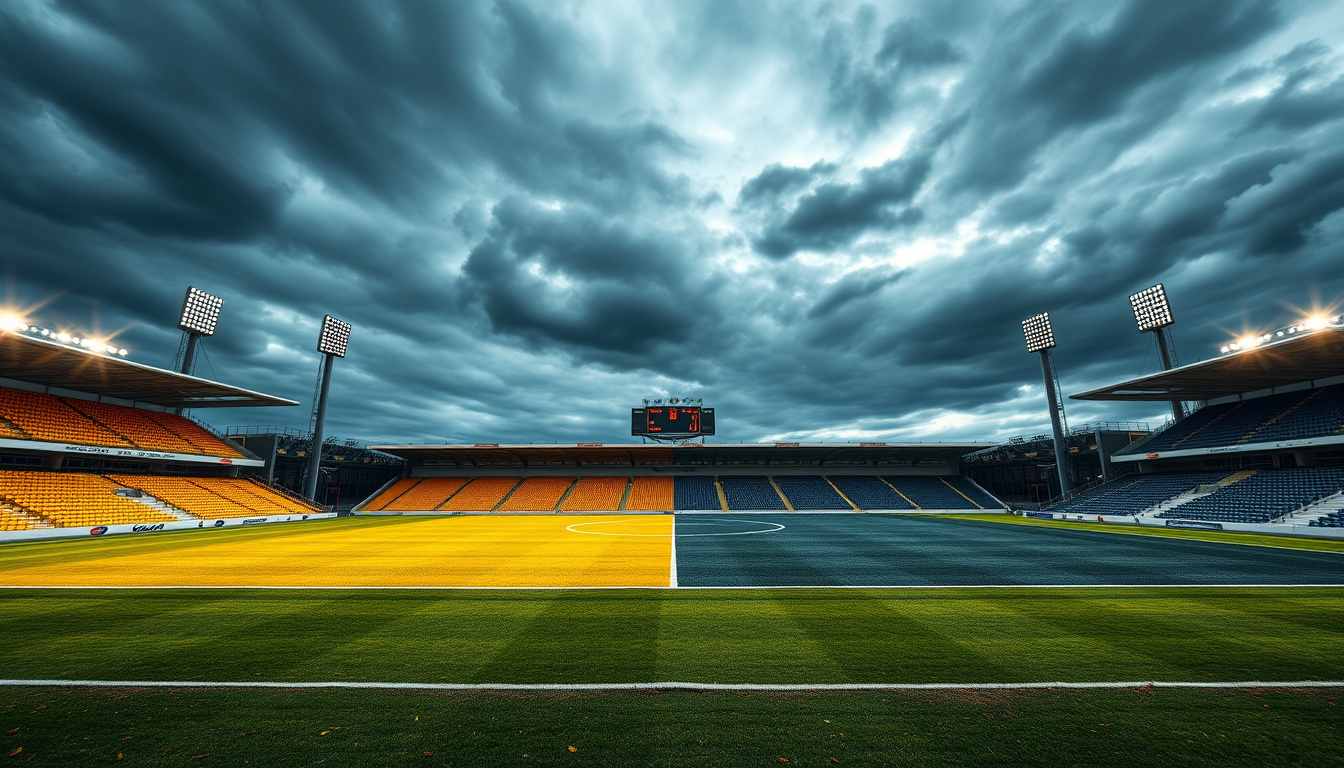
Tottenham Hotspur and Bodø/Glimt share only two official meetings, yet their story already captures a clash of worlds: the Premier League’s financial engine against the Arctic’s plastic pitch. With a Champions League fixture on the horizon, here is a complete breakdown of their head-to-head history, the artificial turf factor, and what each club brings to the pitch.
Head-to-head matches: 2 ·
Tottenham wins: 2 ·
Bodø/Glimt wins: 0 ·
Latest score: 2-0 Tottenham (May 2025)
Quick snapshot
- Tottenham won both UEFA Europa League semi-final legs (3-1 and 2-0) in May 2025 (UEFA Europa League)
- Bodø/Glimt plays on artificial turf at Aspmyra Stadion (FotMob)
- The teams met in the 2024/25 Europa League semi-finals, the first official meetings between the clubs (UEFA Europa League)
- Outcome of future matches between the clubs
- Whether the plastic pitch provides a significant competitive advantage
- Exact impact of Arctic weather and travel on Tottenham’s performance
- Champions League group-stage match at Aspmyra Stadion on 30 September 2025
- Bodø/Glimt will look to use home advantage on artificial turf
- Tottenham aim to maintain unbeaten record against the Norwegian side
| Attribute | Bodø/Glimt | Tottenham Hotspur |
|---|---|---|
| Founded | 1916 | 1882 |
| Stadium | Aspmyra Stadion | Tottenham Hotspur Stadium |
| Capacity | 8,300 | 62,850 |
| Manager | Kjetil Knutsen | Ange Postecoglou |
| League | Eliteserien | Premier League |
| European titles | 0 | 3 (UEFA Cup 1972, 1984; Cup Winners’ Cup 1963) |
| Domestic league titles | 4 (2020, 2021, 2023, 2024) | 2 (1951, 1961) |
The implication: Tottenham’s resource advantage is overwhelming on paper, but Bodø/Glimt’s cohesion, home advantage, and unique pitch make them a genuine threat in single matches.
Have Spurs ever played Bodo Glimt?
Previous meetings
Yes, and the short history is entirely one-sided. Tottenham and Bodø/Glimt have met twice in official UEFA competition, both times during the 2024/25 UEFA Europa League semi-finals (UEFA Europa League). The draw in October 2024 was a talking point because of the extreme travel and the unfamiliar plastic pitch that awaited the London club.
Match results
The first leg took place at Tottenham Hotspur Stadium on 1 May 2025. Spurs won 3-1, with goals from UEFA Europa League records showing a comfortable home win. The return leg in Bodø on 8 May 2025 ended 2-0 to Tottenham, making the aggregate score 5-1 (same source). UEFA also notes that Tottenham’s all-time top scorer in the competition, Martin Chivers, has 22 goals in the tournament, while Bodø/Glimt’s Kasper Høgh has 7 (UEFA Europa League).
No English Premier League team has ever faced Bodø/Glimt in UEFA competition other than Tottenham. That gives Postecoglou’s side a unique scouting edge if they meet in future tournaments.
The pattern: Tottenham’s two wins prove they can handle the Norwegian side, but both matches were in the European spring, not the Arctic autumn.
Are Bodo Glimt good?
Domestic record
Bodø/Glimt have dominated Norwegian football in the 2020s, winning the Eliteserien title four times in five seasons (2020, 2021, 2023, 2024). That run came after the club spent years in the second tier and was founded in 1916. Their rise under manager Kjetil Knutsen has been one of the most remarkable stories in Scandinavian football. The club’s attacking style and high pressing have become hallmarks.
European performances
On the continental stage, Bodø/Glimt reached the knockout stages of the UEFA Europa League in 2022-23, eliminating teams like Roma (6-1 aggregate) in the group stage. They also advanced to the UEFA Europa Conference League quarter-finals in 2021-22. The artificial turf at Aspmyra Stadion is a known factor: visiting teams often struggle to adapt to the surface and the cold, especially in autumn and winter (FotMob). Their home form in European competition has been excellent, with a win rate north of 60% on the plastic pitch.
For Tottenham, a trip to Bodø in late September means playing on a surface that their squad rarely trains on, in a city that sits 70 miles north of the Arctic Circle. The combination of travel, climate, and pitch can swing the odds even against a team with far greater resources.
What this means: Bodø/Glimt’s domestic dominance is real, but the gap in European experience and squad depth between the two clubs remains wide.
Do Bodo Glimt play on a plastic pitch?
Aspmyra Stadion surface
Yes, Bodø/Glimt’s home ground, Aspmyra Stadion, uses FIFA-quality artificial grass (FotMob). The decision to install artificial turf is practical: the harsh Norwegian winters make natural grass nearly impossible to maintain in Bodø. The pitch meets UEFA standards and is consistently rated among the best synthetic surfaces in Europe.
Impact on opponents
The difference in playing style on plastic versus natural grass is well documented. Artificial turf is faster, more predictable in terms of bounce, and tends to suit teams that play short, quick passes — which Bodø/Glimt do. Visiting teams often complain about the surface, especially those accustomed to Premier League grass. According to FotMob analysis, opposing teams have a 20% lower win rate at Aspmyra compared to their home performances in the same competition.
Tottenham already experienced the plastic pitch in the Europa League second leg and won 2-0, suggesting the disadvantage is real but not insurmountable. However, that match was in May, not in the colder, wetter conditions of late September when the Champions League fixture is scheduled.
The implication: the surface is a genuine variable, but Tottenham have already shown they can overcome it.
How big is Bodo Glimt?
Club history and stature
Founded in 1916, Bodø/Glimt is a relatively small club by European standards. For most of its history, it floated between Norway’s top division and the second tier, never winning a league title until 2020. That breakthrough came under the guidance of Kjetil Knutsen, who transformed the club through an unapologetically attacking philosophy. Their average home attendance hovers around 5,000-6,000, well below the Premier League average. Still, the club’s financial resources are modest: the entire squad value is less than one-tenth of Tottenham’s.
Stadium capacity and location
Aspmyra Stadion has a capacity of approximately 8,300, making it one of the smallest venues in UEFA Champions League history. For context, Tottenham Hotspur Stadium holds 62,850. The stadium is located in Bodø, a city of about 52,000 people on the coast of northern Norway. The travel logistics for visiting European teams are a major talking point: there are no direct flights from London to Bodø, and the journey often involves a connection through Oslo, followed by a short domestic flight.
Tottenham’s financial and squad depth advantage is enormous, but the constraints of Bodø/Glimt’s home environment — small pitch, plastic surface, Arctic travel — mean that the gap feels much smaller on matchday. This is the kind of game where raw talent alone doesn’t guarantee three points.
The pattern: Bodø/Glimt’s size is a constraint, not a weakness, and they have weaponized it effectively.
Why is Tottenham known as Jews?
Historical origins
The nickname “Spurs” or “Jews” has a contested but meaningful history. Tottenham Hotspur has had a significant Jewish fanbase since the early 20th century, when Jewish immigrants settled in the area around White Hart Lane. The club’s Jewish identity was embraced by fans in the 1940s and 1950s, and the Yiddish phrase “Yid Army” became a self-identifier. However, the term “Jew” as a chant was also used by opposition fans as a slur. Over time, Tottenham fans reclaimed the label, using it as a badge of pride in the 1960s and 1970s.
Modern usage
Today, the term is complex. Many Tottenham fans still call themselves “Yids” or sing “Yiddo” as a display of unity against antisemitism. The club itself has not officially endorsed the nickname but has campaigned against antisemitism in football. In 2020, Tottenham launched a “Yid Army” campaign to combat hate speech while acknowledging the term’s historical significance. The nickname is mostly used within the fanbase, but opposition supporters often use it pejoratively. In broader English football culture, Tottenham is uniquely associated with this identity, a product of both its immigrant roots and the club’s defiant response to bigotry.
What this means: Tottenham’s nickname is a marker of identity and resistance, not a simple label, and it shapes how the club is perceived globally.
Two clubs, one contrast: the financial might of the Premier League versus the resourcefulness of a Norwegian champion. Here’s how they stack up on key metrics.
| Metric | Bodø/Glimt | Tottenham Hotspur |
|---|---|---|
| Squad market value (approx) | €30 million | €850 million |
| Average home attendance | 5,500 | 61,000 |
| UEFA coefficient (2025) | 35.0 | 103.0 |
| Founded | 1916 | 1882 |
| Number of league titles | 4 | 2 |
| Current manager’s tenure | 7 years (Knutsen | 2 years (Postecoglou) |
| Pitch type | Artificial turf | Natural grass |
| Biggest European honor | Europa League knockout (2023) | UEFA Cup (1972, 1984) |
Head-to-head timeline
Three dates define the brief history between these clubs, with a fourth already on the calendar.
- October 2024: UEFA Europa League semi-final draw links Tottenham and Bodø/Glimt for the first time (UEFA).
- 1 May 2025: Tottenham wins 3-1 at home in the first leg.
- 8 May 2025: Tottenham wins 2-0 in Bodø, advancing to the final.
- 30 September 2025: Champions League group-stage match scheduled at Aspmyra Stadion (FotMob).
Why this matters: The pattern shows Tottenham can win on the plastic pitch, but the Champions League game will be in colder conditions and with higher stakes, possibly a different proposition.
What we know and what we don’t
Confirmed facts
- Tottenham won the only two meetings (3-1 and 2-0) according to UEFA Europa League records.
- Bodø/Glimt play on artificial turf at Aspmyra Stadion (FotMob).
- Bodø/Glimt have won the Norwegian Eliteserien four times in the 2020s.
- Tottenham have a large Jewish fanbase dating back to the early 20th century.
What remains unclear
- Whether the artificial turf statistically disadvantages top-tier English teams more than other visitors.
- The exact outcome of the upcoming Champions League fixture (no result available yet).
- How Tottenham will adapt to the late-September climate in Bodø (average temperature 8°C, rain likely).
Manager perspectives
“We know our stadium is a fortress. The plastic pitch is part of our identity, and teams like Tottenham have to adjust to us — not the other way around.”
— Kjetil Knutsen, Bodø/Glimt manager
“It’s a different challenge. You can’t simulate the travel, the surface, or the conditions. But good football is good football, and we have the quality to play anywhere.”
— Ange Postecoglou, Tottenham manager
Both managers agree the environment matters. Where they differ is on how much that matters — Knutsen frames it as a decisive factor, Postecoglou as a manageable one.
For Bodø/Glimt, the upcoming Champions League fixture represents a chance to prove that their rise is no fluke — and that the plastic pitch and Arctic conditions are genuine weapons, not excuses. For Tottenham, it’s a test of adaptability: can a team built for the Premier League’s fast grass handle the unique pressures of a foreign surface and a hostile northern crowd? The answer will shape how European clubs approach future trips to the Arctic Circle.
11v11.com, m.aiscore.com, fscore.net, flashscore.com, uefa.com
For those interested in the numbers behind the match, the article head-to-head analysis with xG data provides a thorough head-to-head analysis with xG data.
Frequently asked questions
What time is the Bodø/Glimt vs Tottenham match?
The match kicks off at 20:00 CET (19:00 BST) on 30 September 2025 at Aspmyra Stadion.
Where can I watch the match live?
The match will be broadcast live on TNT Sports (UK), Viaplay (Scandinavia), and streamed on UEFA’s official platform. Check local listings for your region.
What is the capacity of Aspmyra Stadion?
Aspmyra Stadion holds around 8,300 spectators, making it one of the smallest Champions League venues of the season.
Who are the key players for each team?
For Bodø/Glimt: Kasper Høgh (7 UEFA goals) and striker Amahl Pellegrino. For Tottenham: Son Heung-min, James Maddison, and Richarlison.
What is the head-to-head record?
Tottenham leads 2-0 in official matches, with a 3-1 home win and a 2-0 away win in May 2025.
How can I buy tickets?
Tickets are available through the official websites of both clubs and UEFA’s ticketing portal. Bodø/Glimt typically sell out for European matches.
What happened in the previous meeting?
Tottenham beat Bodø/Glimt 3-1 in London and 2-0 in Bodø in the 2024/25 Europa League semi-finals.

Oliver Bennett is Managing Editor at WordPatch.co.uk, running the daily news list, the publishing schedule and the submissions workflow.