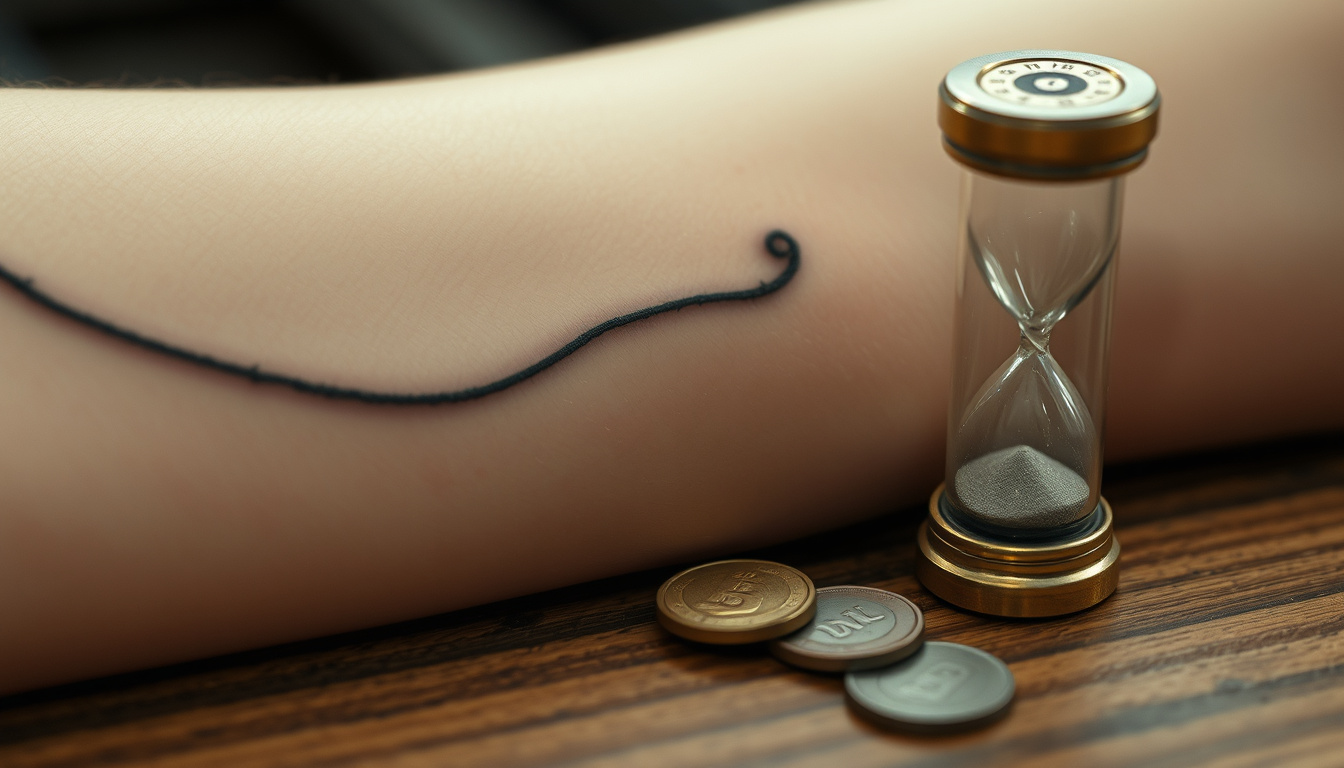
A fine line tattoo can look like a pen sketch on your skin — delicate, minimalist, almost fragile. But that elegance comes with a trade-off: thinner lines fade faster than bold ones, and aftercare matters a lot more than many first-timers expect.
Fine line tattoo longevity: 5–10 years with proper care ·
Average cost in Dublin: €80–€200 per session ·
Healing time: 2–4 weeks ·
Popularity growth (2020–2025): Search interest increased by 40% (Google Trends)
Quick snapshot
- Fine line tattoos use single-needle or very fine gauge (InkAddict)
- They fade faster than bold tattoos (IGLA Tattoo)
- Sun exposure accelerates fading (Evolve Tattoo Collective)
- Impact of GLP-1 medications on tattoo healing
- Long-term effects of fine line tattoos on skin elasticity
- Exact meaning behind 444 tattoo beyond angel numbers
- Surface healing: 2–4 weeks (IGLA Tattoo)
- First touch-up typically needed after 4–6 years on high-friction areas (Burned Hearts)
- Book a consultation at a Dublin studio specialising in fine line work
- Plan aftercare with sun protection and moisturising
- Schedule a professional check-up every 1–2 years
The numbers are consistent: fine line tattoos demand more maintenance than traditional styles, but the payoff is a subtle, refined look. The table below pulls together the essential numbers for anyone considering a fine line piece in Ireland.
| Attribute | Detail |
|---|---|
| Technique | Single needle or fine liner (0.05mm–0.2mm) |
| Typical cost (Dublin) | €80–€200 per piece |
| Healing time | 2–4 weeks for surface healing |
| Touch-up frequency | Every 2–5 years |
| Best body parts | Forearm, ankle, collarbone, behind ear |
The pattern: Dublin residents pay a premium for precision, but the maintenance timeline is what separates fine line from traditional work.
Do Fine Line Tattoos Last Long?
How fine line tattoos age
- Fine line tattoos fade more noticeably than bold tattoos because less ink sits in the skin from the start (IGLA Tattoo).
- Minor migration or blurring is more visible since there is no thick outline to mask it (IGLA Tattoo).
- Some artists note that fresh fine line tattoos can look unusually crisp or dark immediately after the session, then soften during healing.
What this means: a fine line tattoo can still look great at five years, but it will not look the same as the day it was done — and that is normal.
Factors that affect longevity
- UV exposure is one of the biggest threats because sunlight breaks down ink (Evolve Tattoo Collective).
- Placement matters: inner forearm, upper arm, back, and thigh hold crispness longer than hands, fingers, and feet (Burned Hearts).
- Oily or textured skin can also reduce the crisp appearance over time (InkAddict).
The trade-off: choosing a sheltered spot with low movement gives your fine line piece the best chance of aging gracefully.
Tips to extend the life of your fine line tattoo
- Moisturise daily and apply sunscreen whenever the tattoo is exposed to light (IGLA Tattoo).
- Schedule a professional assessment every one to two years to catch early softening (Evolve Tattoo Collective).
- Touch-ups are common every 2–5 years, especially on high-friction areas.
What Are the Downsides of Fine Line Tattoos?
Fading and blurring over time
- As noted, fine line work fades faster and shows blurring more easily than thicker styles (InkAddict).
- If a blowout occurs (ink spreads under the skin), it is more obvious without a heavy outline.
Higher cost per session
- Fine line requires a highly skilled artist — precision technique and steady hands matter more than for bold work.
- Dublin studios charge €80–€200 per piece, and top artists book weeks in advance.
Requires an experienced artist
- Not every tattooist does fine line well; the style demands control of depth and needle speed.
- Some artists note that fresh fine line tattoos look darker initially, then soften — a sign of proper healing.
Dublin shoppers pay a premium for fine line, but choosing a less experienced artist can lead to faster fading and higher touch-up costs. A consultation at a specialist studio like XOXO Tattoo Dublin is a smart first step.
Can You Get a Tattoo While on GLP-1?
GLP-1 medications and skin healing
- GLP-1 agonists (like semaglutide) may affect immune response and healing according to experts at the Mayo Clinic.
- There is no clear contraindication, but caution is advised because these drugs slow gastric emptying and can alter nutrient absorption.
Consulting your doctor before tattooing
- The Mayo Clinic recommends discussing any immune-modifying medication with your doctor before getting tattooed.
- If you are on a stable dose and your provider gives the go-ahead, the risk appears low.
Alternatives and timing
- Wait until your medication and overall health are stable — typically after the first few months of treatment.
- Choose a small fine line piece as a test to see how your skin responds.
The pattern: medical guidance on tattoos and GLP-1 is still thin, but the precautionary approach is the only safe one.
Why Do Girls Get 444 Tattooed?
Angel number 444 meaning
- In numerology, 444 is considered an angel number symbolising protection and alignment (Mindbodygreen).
- Many see it as a sign they are on the right path or being guided.
Popularity in fine line script
- Fine line script is the preferred style for minimalist number tattoos because it looks clean and understated.
- Social media trends on Instagram and TikTok have driven interest, with Dublin studios reporting more requests for script in 2024–2025.
Other common number tattoos
- 777 (luck and divine wisdom), 111 (new beginnings), and 222 (balance) are also popular.
- The fine line technique works well for any small numeric design.
Why this matters: the 444 trend is more about personal meaning than fashion — and that meaning makes the tattoo more likely to be well cared for.
What’s the Worst Spot on Your Body to Get a Tattoo?
Pain levels by body part
- The ribs, feet, and hands are widely reported as the most painful spots for any tattoo (Healthline).
- Fine line tattoos are generally less painful than heavy shading styles (IGLA Tattoo), but placement still matters.
Healing challenges for fine line tattoos
- Bony areas like the collarbone and shin have less fat and move more, which can delay healing.
- Fine line work on fingers and feet tends to blur faster and need more frequent touch-ups (Burned Hearts).
Artistic considerations for placement
- Fine line requires smooth, low-movement areas for the cleanest result — inner forearm, upper arm, and back are ideal.
- Scarring risk is higher on spots where skin is thin over bone.
For a first fine line piece in Dublin, a forearm or ankle placement balances visibility, healing ease, and longevity. Save the ribs for a bolder design.
Upsides
- Subtle, elegant aesthetic that blends with skin
- Less painful during application than traditional styles
- Faster surface healing (2–3 weeks for small pieces)
- Easy to cover or modify later
Downsides
- Fades faster — needs touch-ups every 2–5 years
- More visible when blurring or blowout occurs
- Requires a highly skilled artist; not universally offered
- Not ideal for oily or textured skin
For a Dublin resident weighing the decision, the numbers are straightforward: a fine line tattoo costs €80–€200 upfront and another €80–€200 every few years for maintenance. The artist’s skill determines whether that maintenance schedule stays at the lower end or accelerates.
instagram.com, instagram.com, instagram.com, facebook.com, dagsformen.se
A thorough Finnish-language resource, Finnish fine line tattoo guide, explores fine line tattoo longevity and Dublin pricing.
Frequently asked questions
Can any tattoo artist do fine lines?
Not all tattoo artists specialise in fine line work. The technique requires a steady hand and experience with single-needle or tight-line groups. It is best to check the artist’s portfolio for healed fine line pieces before booking.
Do tattoos show up on MRI scans?
Some tattoo pigments contain metallic compounds that can cause slight distortion on MRI images, but modern inks are generally safe. Inform your radiologist if the tattoo is near the scan area. The FDA advises checking with your healthcare provider.
Who spent $200,000 to remove tattoos?
In 2023, a man who was heavily tattooed reportedly paid around $200,000 for multiple laser removal sessions. This is an extreme case; typical removal costs range from €200 to €500 per session depending on size and colour.
How much does a fine line tattoo cost?
In Dublin, expect €80–€200 per piece for a small fine line design. Larger custom work can run higher. Walk-in prices may be slightly lower, but booking a consultation ensures the best result.
What is the meaning of a fine line tattoo?
Beyond the aesthetic of delicacy and minimalism, fine line tattoos often carry personal symbolism — a date, a name, a small icon. The style itself suggests understatement and precision.
Can you get a tattoo with multiple sclerosis?
There is no blanket prohibition, but because MS can affect the immune system, some neurologists advise caution. Always consult your doctor first. An MS specialist can give personalised advice based on your current treatment.
Are fine line tattoos worth it in 2026?
Yes — if you are willing to commit to aftercare and occasional touch-ups. For someone who values a barely-there aesthetic over bold permanence, fine line remains a strong choice. For low-maintenance owners, traditional tattoos are more practical.

Freddie Clarke is Senior Reporter at WordPatch.co.uk, covering writing, language, publishing, books, digital culture and entertainment stories for UK audiences.