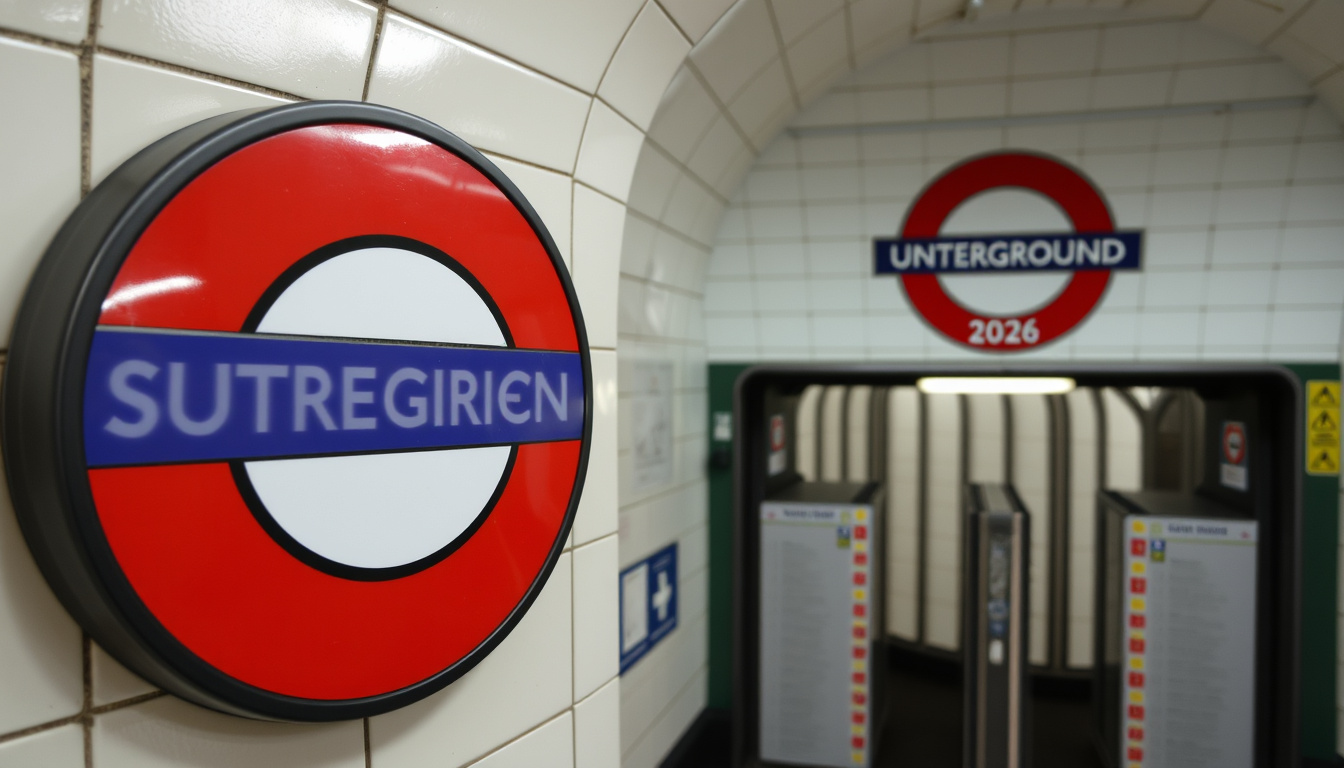

If you rely on the Tube to get around London, the sight of a strike announcement can throw your whole week into uncertainty. With May’s walkouts called off at the last minute and June’s dates still hanging in the balance, the 2026 London Underground strikes have become a test of patience — and planning.
Average London Tube driver salary: £56,000 per year · May 2026 strike status: All strikes suspended after last-minute talks · Next planned strike dates (June 2026): 16–17 June and 18–19 June (still subject to negotiation) · Night Tube operating hours: Fridays and Saturdays on 5 lines
Quick snapshot
- May 2026 strikes suspended after last-minute talks (Time Out)
- June strikes still listed on TfL’s campaign page (Transport for London)
- Whether June strikes will proceed or be called off
- Final outcome of pay and hours negotiations
- Negotiations between RMT and TfL continue (Time Out)
- Further strike action possible if talks fail (Time Out)
Four key figures capture the current state of the dispute: strike status, next dates, driver pay, and Night Tube availability.
| Fact | Detail |
|---|---|
| Strike Status | May 2026 strikes suspended; June strikes pending |
| Next Strike Dates | 16–17 and 18–19 June 2026 (tbc) |
| Average Driver Salary | £56,000 per year |
| Night Tube Hours | Friday and Saturday nights, 5 lines |
The pattern: The June dates remain the central uncertainty. If negotiations stall, London could face two back-to-back 24-hour walkouts.
Are the London Tube Strikes still on?
May 2026 strike suspension
- All May strikes have been suspended after last-minute talks (Transport for London strikes page)
- The RMT announced the call-off just before the first walkout was due to begin (Time Out report)
June 2026 planned strike dates
- Two 24-hour strikes are scheduled: 16–17 June and 18–19 June (City Lit guide)
- Another source lists dates as 2–3 and 4–5 June, indicating some confusion (Time Out)
How to check real-time strike status
- TfL’s official strikes page is the most reliable source for updates (TfL strikes campaign)
- Follow TfL on social media for last-minute changes
Why were the Tube strikes called off?
Role of RMT and Aslef unions
- The RMT called off the May strikes after 11th-hour talks with TfL (Time Out)
- Aslef, representing train drivers, is also involved but the primary dispute is with the RMT
Pay and working hours demands
- Drivers are seeking a 32-hour work week and higher pay (Time Out coverage)
- The dispute centres on the introduction of a compressed four-day working week
Last-minute negotiation details
- Although exact terms weren’t disclosed, the union said progress was made on key issues
- Both sides agreed to continue talks, leading to the suspension of May action
How to get around London during Tube strike?
- Step 1: Plan with TfL Journey Planner
Before heading out, check the TfL Journey Planner for real-time route updates. It will show alternative options if your usual Tube line is disrupted.
- Step 2: Use London Buses
- Buses are expected to run as normal during Tube strikes (TfL official guidance via Time Out)
- Extra bus services may be added to busy routes
- Step 3: Try London Overground and National Rail
- London Overground is expected to run as planned (Time Out)
- National Rail services are an alternative for longer journeys (Time Out)
- Step 4: Consider Cycling or Walking
- Short journeys become faster by bike when the Tube is crowded
- TfL’s Santander Cycles hire scheme is available across central London
- Step 5: Use River Services
- Thames Clippers river buses run along the Thames and are unaffected by Tube strikes
- They are a scenic and often reliable alternative for journeys along the river
During the May strike days that were called off, many commuters had already made backup plans. The lesson: always have a Plan B. Buses and Overground are your safety net.
The implication: While buses and the Overground are reliable alternatives, they can become crowded quickly; building extra time into any journey is wise.
How much does a London Tube driver earn?
Base salary and overtime
- According to Time Out, the average Tube driver salary is around £56,000 per year
- With overtime, some drivers earn up to £70,000
Comparison with other professions
- Union demands would see some drivers paid more than surgeons in some cases (Time Out comparison)
- The average junior doctor salary in the UK is around £32,000–£50,000, making the comparison striking
Union pay demands
- The RMT is pushing for a 32-hour week without loss of pay, effectively a pay rise per hour
- Management argues that the current salary is already competitive for the role
The pattern: The pay dispute remains a flashpoint, and until a deal is reached, strike risk persists.
Do tubes run at 3am?
Night Tube lines and hours
- Night Tube runs on Fridays and Saturdays on five lines: Central, Jubilee, Northern, Piccadilly, and Victoria (TfL)
- Services typically run through the night, with trains every 10–20 minutes
Frequency of service
- Trains run every 10–20 minutes on Night Tube lines
- During strikes, these services may not run if the strike falls on a Friday or Saturday
Impact of strikes on Night Tube
- If a strike takes place on a weekend, Night Tube will likely be cancelled
- Check TfL before heading out late on strike days
For night workers and late-night revellers, the June strike dates could fall on weekends. If they go ahead, Night Tube will be off — leaving only night buses and taxis.
What this means: Night Tube is a weekend luxury; during strikes, it’s likely unavailable.
Alternative transport comparison
Three modes, one pattern: each has a trade-off between coverage, cost, and reliability during strike days.
| Mode | Expected during strike | Typical frequency | Cost per journey |
|---|---|---|---|
| London Underground | Severely limited or cancelled | None during strike hours | Peak: £2.80–£5.50 |
| London Buses | Running as normal (TfL via Time Out) | Every 8–15 minutes | £1.75 flat fare |
| London Overground | Running as planned (Time Out) | Every 10–20 minutes | Same as Tube zonal fare |
The trade-off: Buses are cheapest and run, but can be slow. Overground is faster but limited to its own routes.
Timeline of London Underground strikes 2026
- March 2026: RMT announces 24-hour strikes for May and June (City Lit)
- May 2026: First strikes scheduled for 19 and 21 May (City Lit)
- 11th hour before May strikes: RMT calls off May strikes after talks with TfL (Time Out)
- June 2026 (planned): Two further 24-hour strikes set for 16–17 and 18–19 June (City Lit)
The pattern: strikes are called, then suspended at the last minute. Commuters can’t assume safety until a deal is signed.
What we know and what’s unclear
Confirmed facts
- May 2026 strikes have been suspended (Transport for London)
- June strike dates are officially announced (City Lit)
What’s unclear
- Whether June strikes will proceed or be called off
- Final outcome of pay and hours negotiations
The pattern: Confirmed facts are few; uncertainty dominates the dispute.
Voices from the dispute
“We have made progress in talks and therefore the action has been suspended.”
— Mick Lynch, RMT general secretary (Time Out)
“Services on the Tube will run as normal on the days of the planned May strikes.”
— TfL spokesperson (Transport for London)
“If sufficient progress is not made, more strike action will follow.”
— RMT statement (Time Out)
For the millions of Londoners who rely on the Tube daily, the pattern of last-minute suspensions has become a frustrating game of wait-and-see. The June strike dates remain the next pressure point. If the RMT and TfL cannot find common ground on pay and the 32-hour week, the city faces two days of severe disruption. For commuters, the clear takeaway: have a backup route ready — the uncertainty is not going away soon.
Frequently asked questions
What is the RMT union and why is it involved in Tube strikes?
The National Union of Rail, Maritime and Transport Workers (RMT) represents London Underground staff. It calls strikes when negotiations over pay, hours, and conditions break down.
How do I know if my Tube line is affected by a strike?
Check TfL’s official strikes page and use the Journey Planner for real-time updates. The TfL app also sends alerts for your saved routes.
Can I get a refund for my travel card if there is a strike?
TfL’s refund policy allows claims if your journey was delayed by 15+ minutes due to strike action. Contact TfL customer services with your Oyster or contactless card details.
Are bus services usually busier during a Tube strike?
Yes, bus services can become extremely crowded during Tube strikes. TfL may add extra buses on popular routes, but expect longer waiting times.
Do all London Underground lines shut down during a strike?
Not necessarily. Some lines may have limited service depending on the strike scope. Always check TfL for line-specific information.
What is the difference between a Tube strike and a rail strike?
Tube strikes affect the London Underground network; rail strikes affect National Rail services. They often involve different unions and separate disputes.
How often have Tube strikes happened in recent years?
Strikes have occurred periodically, with notable disputes in 2022-2023 over pay and job cuts. The 2026 strikes are part of ongoing tensions (Wikipedia overview).
Is the Elizabeth line affected by Tube strikes?
TfL states the Elizabeth line is expected to run as normal during Tube strikes (TfL), though it may be busier.
If you need to contact your travel provider about alternative arrangements, you can reach TUI Customer Service for holiday plans. And don’t forget to keep your travel documents ready — the UK Passport Photo Requirements page can help if you need a new one quickly.

Harriet Langford is Editor-in-Chief at WordPatch.co.uk, overseeing editorial policy, corrections, standards, submissions policy and publication decisions. She writes occasional editorial columns and covers major publishing stories.