
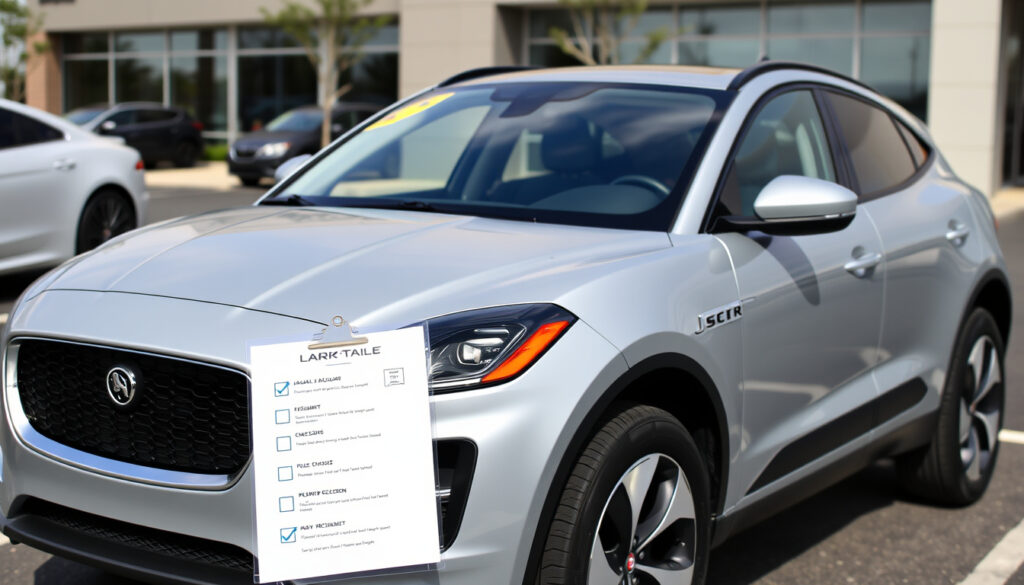
Some cars win awards and still can’t find buyers. The Jaguar I-Pace snagged World Car of the Year in 2019, yet production quietly ended in March 2024 after just six years on the road. If you’re browsing used electric SUVs, that gap between praise and sales figures deserves a closer look.
Power: 394 horsepower · Torque: 512 lb-ft · Model Years: 2018-2024 · Drive: All-wheel-drive · 0-60 mph: under 5 seconds
Quick snapshot
- Whether remaining battery issues on used models have been fully resolved
- Long-term used value projections post-discontinuation
- Used market only — no new I-Paces available
- Parts availability concerns as manufacturer support scales back
- Potential collector interest in low-mileage examples
The specifications table below consolidates key technical data from multiple sources.
| Specification | Value |
|---|---|
| Type | All-electric SUV |
| Production | 2018-2024 |
| Powertrain | Dual motors AWD |
| Key Award | World Car of the Year (2019) |
| Status | Discontinued |
Are Jaguar I-PACE worth buying?
The honest answer depends on what you’re after. On paper, the I-Pace delivered genuine performance: 394 hp, 512 lb-ft of torque, and a 0-60 time under five seconds from a dual-motor all-wheel-drive system. The WLTP range started at 292 miles, though EPA figures were more conservative at 234 miles initially, with a December 2019 software update pushing that to 246 miles.
The gap between WLTP and EPA ratings matters for buyers who commute daily — real-world range often fell short of official numbers, particularly in colder months.
Performance and pricing factors
When new, the I-Pace commanded a premium price befitting the Jaguar badge. Today, used examples have dropped substantially — a depreciation pattern common to discontinued luxury EVs, but more severe than some rivals. The initial retail price reflected Jaguar’s ambition to compete with Tesla and traditional German automakers in the premium electric segment.
The car’s driving dynamics earned praise: the I-Pace felt planted and responsive, with a drag coefficient of 0.29 helping efficiency at higher speeds. Boot space measured 656 litres in the rear plus an additional 28 litres in the front trunk.
Depreciation concerns
Used I-Pace values tell a story of a car that never quite found its market. Early buyers absorbed heavy losses as Jaguar moved to clear inventory, and the 2024 discontinuation accelerated this trend. For second-hand buyers, this creates opportunity — but also raises questions about long-term reliability support.
An Ireland-based owner reported achieving roughly 370km of real-world range in summer conditions and 320km in winter, suggesting the battery performs adequately in temperate climates when not subjected to extreme mileage wear.
Upsides
- Strong performance from 394 hp dual motors
- Significant used-price drops from original MSRP
- Practical 656-litre boot capacity
- Sleek design with Jaguar badge appeal
Downsides
- Rapid depreciation leaves owners underwater
- Battery degradation more pronounced than rivals
- Infotainment lagging behind modern standards
- Production ended — parts support uncertain
What are common problems with the I-Pace?
Battery issues defined the I-Pace ownership experience more than any other factor. According to Electrifying.com (automotive publication covering EV reliability), Jaguar faced significant battery problems that prompted hundreds of buybacks and thousands of recalls — a scale unusual even for early-generation electric vehicles.
Battery capacity retention varied dramatically with age and mileage: a 7-year-old car with 76,000 miles showed 81% capacity retention, while a 3-year-old with 20,000 miles retained 97%. At the 5-year mark with 40-45,000 miles, low 80s% retention was common — a pattern described as rare in comparable Audi or Mercedes models.
Reliability issues 2018-2024
Beyond battery concerns, owners reported recurring faults in several areas. Recalls addressed both brake systems and bodyshell structural issues, according to Electrifying.com. The infotainment system drew particular criticism — laggy response times, freezing episodes, and climate controls that required too many steps to operate basic functions.
Owner accounts from multiple sources describe charging port failures including stuck plugs that required emergency cable releases, navigation updates that demanded USB downloads prone to corruption, and heater replacements needed on early models with parts delays extending repair timelines.
Not every experience was troubled. Some owners reported four trouble-free years with their I-Paces, and the powertrain itself benefited from its simple electric architecture with few moving parts — a theoretical reliability advantage that sometimes materialized in practice.
Battery fire risk
Concerns about battery fire incidents circulated in owner forums and automotive coverage, though Electrifying.com noted by 2024 that “battery problems now ‘ancient history’ for remaining cars” — suggesting Jaguar’s recall and buyback programs addressed the most serious cases. Prospective buyers should verify any used I-Pace has documentation of completed recall work.
The powertrain holds up well given its simplicity. Software and charging hardware, not battery chemistry itself, caused most owner frustrations.
Was Jaguar I-PACE discontinued?
Yes, definitively. The I-Pace production line at Magna Steyr in Austria ended in December 2024, marking the close of Jaguar’s first full-electric model. A TopGear spokesperson reported that “as JLR transitions to its electric future, current Jaguar production of XE, XF and F-Type came to an end in mid 2024,” with the I-Pace and E-Pace following later that year.
Production end reasons
Slowing sales drove the decision more than any single factor. The I-Pace never achieved the volume that justified its development costs alongside Jaguar’s broader electrification strategy. Corporate vision shifted toward a reset brand positioning that required simplifying the product portfolio.
Trim reductions complicated the picture: the S and SE variants were discontinued for the 2022 model year after a 2021 production hiatus, according to JD Power’s vehicle history records. This left fewer configurations available to buyers in the final years, narrowing market appeal.
Availability now
New I-Paces are gone from dealerships. The used market offers the only path to ownership, with listings spanning the 2018-2024 production run. Prices reflect the depreciation pattern and buyer wariness about a discontinued model from a brand with shrinking Irish and European presence.
Why is the I-Pace not selling?
The I-Pace arrived first among premium German rivals in the electric SUV space, yet failed to convert early-mover advantage into sustained sales momentum. Several factors converged: pricing miscalibration, technology that aged poorly, and a brand struggling to project consistent electric ambition.
Sales decline factors
Range anxiety plagued early EV adoption, and the I-Pace’s real-world efficiency didn’t ease those concerns. Software updates helped — a December 2019 tweak added up to 12 miles of range to older models — but couldn’t overcome the fundamental gap between WLTP test numbers and daily driving reality.
Fleet sales to organizations like the NHS created a secondary market of high-mileage examples that inflated supply of used I-Paces, according to Electrifying.com. When thousands of lease returns hit the market simultaneously, values collapsed further.
Depreciation disaster
Owners who paid £50,000-£70,000 for new I-Paces watched values fall to £20,000-£30,000 within three to four years. This “depreciation disaster,” as automotive coverage described it, discouraged new buyer interest — why buy new when the resale market punishes early adopters so severely?
The March 2024 incompatibility with the Intelligent Octopus Go tariff added financial insult. JLR software changes removed the I-Pace from a popular smart charging tariff, effectively increasing running costs for tariff users by approximately £75 annually — a meaningful sum that circulated in owner communities and further damaged brand perception.
Are Jaguar I-Pace cars reliable?
Reliability data tells a mixed story. The electric powertrain itself proved durable in most cases — motors and drivetrain components suffer from fewer moving parts and associated wear. Battery longevity, however, emerged as a genuine weakness compared to Audi and Mercedes electric equivalents.
Owner experiences
Long-term owners documented experiences across forums and video channels. A Macfilos contributor described the I-Pace as “stunning” after a year covering 7,000 miles but noted charging port issues including plugs that stuck and emergency cables that failed. Jaguar Assist eventually resolved these problems through at-home service visits.
YouTube owner testimonials mentioned heater failures on early models requiring parts that took weeks to source, app connectivity problems shortly after purchase that necessitated dealership intervention, and charge port mechanisms that occasionally pulled cables free due to stiff release buttons.
Comparison to expectations
Owners who expected Tesla-level software sophistication or Audi-level build quality from their I-Pace largely found neither. The infotainment froze and lagged, charging systems proved less reliable than expected, and some owners sold their cars rather than continue dealing with recurring faults.
Those who accepted the I-Pace as an imperfect but enjoyable driver’s electric SUV reported more positive experiences. The car’s handling and performance satisfied driving enthusiasts, even when software and hardware let them down elsewhere.
The specification comparison below summarizes the official published figures from Wikipedia and manufacturer documentation.
| Specification | Detail |
|---|---|
| Announced | March 2018 |
| European deliveries | June 2018 |
| Initial WLTP range | 292 miles |
| Initial EPA range | 234 miles |
| Updated EPA range | 246 miles (December 2019 software) |
| Motor output | 394 horsepower |
| Torque | 512 lb-ft |
| Drag coefficient | 0.29 |
| Boot space (rear) | 656 litres |
| Boot space (front) | 28 litres |
| Water fording depth | 500 mm |
| Production end | December 2024 |
Key milestones
The timeline below tracks the major events in the I-Pace’s production lifecycle.
| Date | Event |
|---|---|
| March 2018 | Model announced |
| June 2018 | European deliveries begin |
| 2019 | World Car of the Year award |
| December 2019 | Software update increases EPA range to 246 miles |
| 2022 | S and SE trims discontinued |
| March 2024 | Lost Intelligent Octopus Go tariff compatibility |
| December 2024 | Production ends at Magna Steyr, Austria |
What we know vs what remains unclear
Three facts anchor any I-Pace evaluation: production ran through 2024, the 394 hp output was genuine, and battery problems prompted major recalls. Unresolved questions include whether any remaining used cars still carry undisclosed battery faults and where used values settle as the market absorbs the discontinued supply.
Confirmed
- Production 2018-2024
- 394 hp dual-motor output
- Major recalls for battery, brakes, bodyshell
- World Car of the Year 2019
- Depreciation severe by any measure
Unclear
- Whether all recalled cars received proper fixes
- Long-term used value trajectory
- Future parts availability in Ireland
Jaguar has faced big battery problems on the I-Pace, and as a result has bought back hundreds and recalled thousands of cars.
— Electrifying.com reviewer
The car has been absolutely faultless. I find the real world range to be around 370km in summer and 320km in winter.
— Boards.ie forum member
As JLR transitions to its electric future, current Jaguar production of XE, XF and F-Type came to an end in mid 2024.
— Jaguar spokesperson
Related reading: Hyundai Tucson for Sale · Tyres on the Drive Review
Frequently asked questions
What is the Jaguar I-Pace range?
The I-Pace offered an EPA-rated range of 234 miles initially, later updated to 246 miles via a December 2019 software improvement. Real-world results varied: an Irish owner reported approximately 370km (230 miles) in summer and 320km (199 miles) in winter, closer to the EPA figure than WLTP test conditions.
What is the Jaguar I-Pace price in Ireland?
New I-Paces are no longer available. Used examples from 2018-2024 now range from roughly €20,000 to €40,000 depending on year, mileage, and condition — a dramatic fall from original pricing of €80,000-€100,000.
What is Jaguar I-Pace EV400?
EV400 refers to the I-Pace’s power output designation, indicating approximately 400 horsepower from its dual-motor setup. The number corresponds to the rounded metric horsepower figure.
What is the Jaguar I-Pace interior like?
The interior featured Jaguar’s traditional luxury materials with a modern touchscreen-focused layout. Owner complaints centered on infotainment lag and complicated climate controls — software that didn’t match the hardware ambition.
Does Jaguar I-Pace have battery fire risk?
Battery fire concerns appeared in early ownership reports, prompting Jaguar’s large-scale recall and buyback program. By 2024, these issues were described as largely resolved for cars that received the necessary software and hardware updates.
Is Jaguar I-Pace performance good?
Performance was genuinely strong: 394 hp, 512 lb-ft torque, and 0-60 under five seconds. The dual-motor all-wheel-drive system provided confident handling and acceleration that satisfied driving enthusiasts.
How reliable is used Jaguar I-Pace?
Used I-Pace reliability varies significantly with maintenance history. Cars that received all recall work and weren’t subjected to high fleet mileage tend to perform adequately. Battery degradation beyond five years is a known concern compared to rivals.
For Irish buyers weighing the I-Pace against alternatives, the math is straightforward: the used price reflects the car’s troubled history, and what you save upfront may reappear in repair costs or reduced battery capacity over time. The performance and driving experience remain genuinely appealing — but only if you buy with eyes open about the trade-offs.

Amelia Foster is Books & Publishing Editor at WordPatch.co.uk, covering book releases, publishing industry updates, author interviews, literary culture and UK publishing trends.