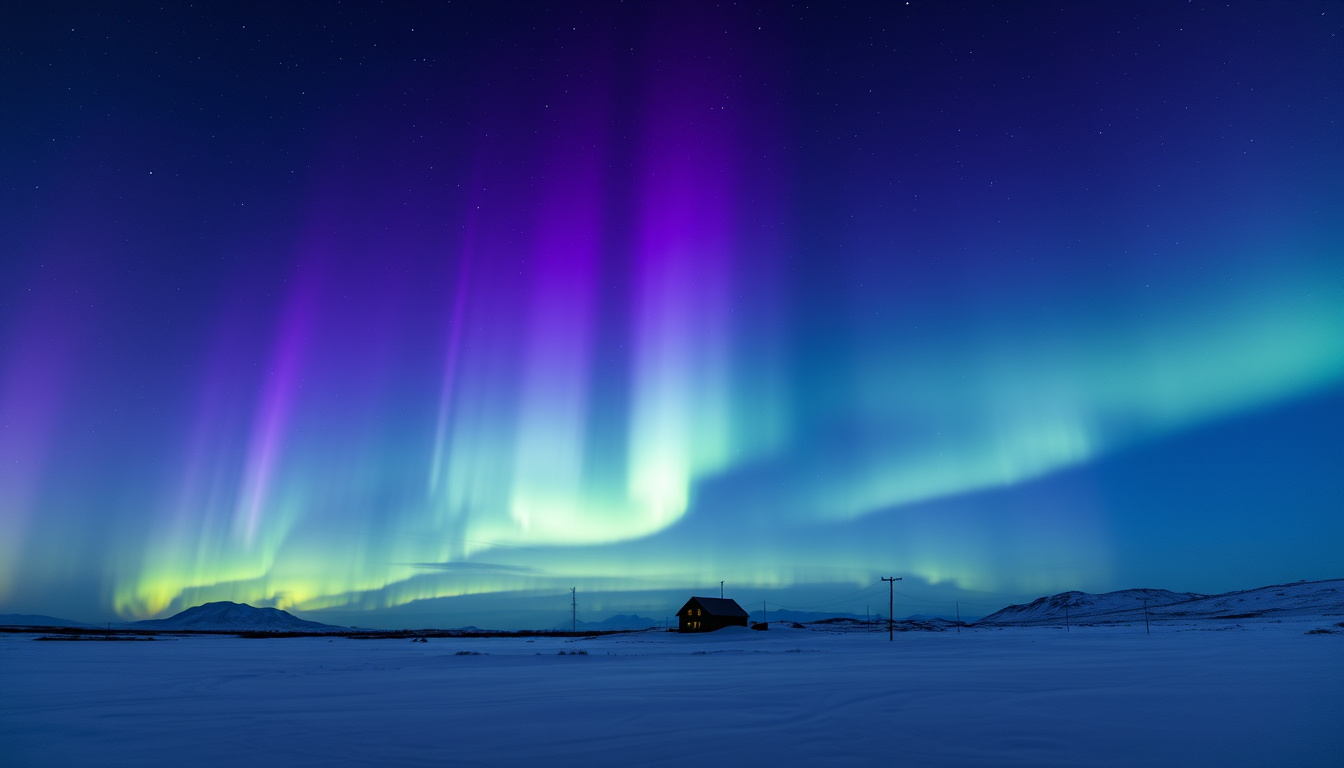
Chasing the Northern Lights feels almost mythical — a green curtain dancing across the sky, visible only when everything lines up just right. If you’re wondering whether a budget trip is realistic, this guide breaks down the causes, best times and places in Europe and Ireland, and how to keep costs low.
Best viewing months: September to March ·
Peak time of night: 10:00 PM to 2:00 AM local time ·
Key cause: Charged particles from the Sun colliding with Earth’s atmosphere ·
Top location in Ireland: County Donegal (west and north coasts) ·
Cheapest country to view: Finland or Norway (depending on flight costs)
Quick snapshot
- Natural light display caused by charged solar particles interacting with Earth’s atmosphere (Nordic Visitor (travel specialist))
- Also known as aurora borealis (Lonely Planet (travel guide))
- Peak season: September to March (Nordic Visitor (travel specialist))
- Best hours: 10 PM to 2 AM (Lonely Planet (travel guide))
- Norway, Sweden, Finland, Iceland (Nordic Visitor (travel specialist))
- Ireland: west and north coasts offer best chance (Nordic Visitor (travel specialist))
- Compare flight and accommodation costs (Book Lapland (travel agency))
- Self-guided trips vs. tours: car rental ~€40/day vs. tour ~€150/person (Vincent Voyage (travel blog))
Here are five key facts about the Northern Lights at a glance.
| Fact | Details |
|---|---|
| Primary cause | Solar wind particles colliding with Earth’s atmosphere (Nordic Visitor) |
| Common colors | Green, pink, red, yellow, blue, violet (Lonely Planet) |
| Best continent | Europe (Scandinavia, Iceland) (Nordic Visitor) |
| Viewing altitude | 50 to 400 miles above Earth (Nordic Visitor) |
| Ancient name origin | Galileo coined “aurora borealis” after the Roman goddess of dawn and Greek god of the north wind (Lonely Planet) |
What Causes the Northern Lights?
Scientific explanation of aurora borealis
- Charged particles from the Sun collide with atoms in Earth’s upper atmosphere, releasing energy as light (Nordic Visitor (travel specialist)).
- The aurora zone – the oval where displays are most frequent – sits between 65 °N and 72 °N latitude (Nordic Visitor).
Three factors must align for a sighting: dark skies, solar activity, and clear weather (Nordic Visitor). The implication: you can’t just show up — you need a forecast and a bit of luck.
What Month Is Best to See the Northern Lights?
Best viewing months in Europe
- The core aurora season runs from September to March, with equinox months (September and March) often delivering the most vivid displays (Lonely Planet (travel guide)).
- For budget travelers, late September to November and March to April offer the best balance of darkness and lower prices (Book Lapland (travel agency)).
Seasonal variations in Ireland
Ireland’s aurora chances are highest in the deep winter months (November–February) when nights are longest and skies dark earliest. Even then, sightings are rare — the country sits well south of the aurora zone at roughly 53 °N (Nordic Visitor (travel specialist)).
The trade-off: you can try from Ireland with near-zero flight cost, but your odds are slim compared to a trip to Scandinavia.
Where Is the Best Place for the Northern Lights?
Top countries in Europe
- Iceland, Norway, Sweden, and Finland lie within or near the aurora oval and consistently offer the best viewing (Nordic Visitor (travel specialist)).
- Lonely Planet calls Iceland a “safe bet” for first-time aurora hunters (Lonely Planet (travel guide)).
Best locations in Ireland
If you’re staying in Ireland, head to the west and north coasts – County Donegal, Mayo, and Sligo offer the darkest skies and the highest probability (Nordic Visitor (travel specialist)).
The pattern is clear: the closer you get to the Arctic Circle, the better your odds. Ireland gives you a chance, but it’s a long shot compared to Tromsø or Reykjavík.
| Country | Aurora likelihood | Budget range (per person) | Key advantage |
|---|---|---|---|
| Norway (Tromsø) | Very high | €700–€1,500 | Direct flights from Europe, well-developed tours |
| Iceland | High | €250–€1,200 | Campervan options keep accommodation cheap |
| Finland (Lapland) | Very high | €600–€1,200 | Glass igloos, budget months Sep–Nov & Mar–Apr |
| Ireland | Low | €0 (local) to €500 | No flight cost if you’re already there |
Why this matters: your budget determines your destination. If you’re based in Ireland and have €500 to spend, a trip to Iceland with a campervan might actually be smarter than a night tour at home.
What Time Will the Northern Lights Be Visible in Ireland?
Peak hours for viewing
- The best window is 10:00 PM to 2:00 AM local time, when geomagnetic activity is usually strongest (Lonely Planet (travel guide)).
- Dark nights are non-negotiable — even a half moon can wash out faint displays (Lonely Planet).
Using the Northern Lights forecast
The NOAA aurora forecast (available online) predicts geomagnetic activity up to three days ahead. For Ireland, keep an eye on the KP index — a value of 5 or higher gives you a real chance (Nordic Visitor (travel specialist)).
Which Country Is Cheaper to Watch the Northern Lights?
Budget-friendly destinations
- A two-person trip to Tromsø can total about €1,400 (€700 each) including flights, hotel, and car rental (Vincent Voyage (travel blog)).
- Iceland can be done for as little as €250 per person via campervan, low-cost flights, and self-catering (Offbeat Escapades (travel blog)).
- Finland (Lapland) offers budget-friendly shoulder seasons in September–November and March–April (Book Lapland (travel agency)).
Cost comparison factors
- Flights: €300 round-trip from Dublin to Oslo or Helsinki is typical; €100 to Reykjavík on budget carriers.
- Accommodation: Hostels from €30/night, campervans from €50/night, hotels from €100/night.
- Tours vs. self-drive: a guided aurora tour runs about €150 per person; a rental car averages €40/day (Vincent Voyage).
- Bundled activity passes can save 20–30% in some destinations (Book Lapland).
The trade-off: Iceland can be the cheapest upfront option (especially with campervans), but Norway and Finland give you much higher reliability for the extra cost.
Upsides
- Lowest-cost option: stay in Ireland and drive to the coast (€0 in airfare)
- Iceland campervan trips start at €250/person, including transport and accommodation
- Self-guided trips give flexibility and cut out expensive tour fees
Downsides
- Ireland sightings are too rare to guarantee success on a short trip
- Budget flights to Nordic countries still add €100–€300
- Low-budget trips require careful planning and booking flexibility
How to Plan Your Northern Lights Trip (5 Steps)
- Choose your destination based on your budget and risk tolerance. Ireland = cheap but low odds; Norway/Finland = more expensive but reliable.
- Book flights in shoulder season (September–November or March–April) to avoid peak holiday prices (Book Lapland).
- Check the NOAA aurora forecast and cloud cover before deciding on a specific night.
- Decide on accommodation – a campervan in Iceland gives you mobility and low cost; a hotel in Tromsø lets you sleep warm and join short tours.
- Pack for cold weather – standing outside for hours in subzero temperatures requires layers, waterproof boots, and hand warmers.
By following these steps, you can balance cost and reliability for your Northern Lights trip.
What We Know vs. What’s Unclear
Confirmed facts
- The Northern Lights are caused by solar particles colliding with Earth’s atmosphere.
- Peak viewing season is September to March (Nordic Visitor).
- Low light pollution is essential.
- Ireland’s west and north coasts offer the best chance in the country.
What’s unclear
- Exact visibility on a specific night is unpredictable – it depends on solar weather and cloud cover.
- Cost ranking of countries fluctuates with exchange rates and seasonal deals.
- Whistling at the Northern Lights is a folklore myth without scientific basis.
- The exact KP index threshold for Ireland can vary depending on local magnetic conditions.
“For the best chances, you need to get away from city lights and look at the northern horizon from a dark-sky location between 10 PM and 2 AM.”
– Met Éireann (Irish national weather service) via Nordic Visitor
“The aurora forecast from NOAA is the gold standard for predicting geomagnetic activity. A KP index above five gives viewers in Ireland a fighting chance.”
For the average traveler from Ireland with a limited budget, the choice is clear: either invest €250–€700 in a dedicated trip to Iceland or northern Scandinavia, or accept the very real possibility that you’ll drive to Donegal on a cloudy night and see nothing. The cheaper option isn’t always the better bet — sometimes the €600 trip to Tromsø gives you more certainty per euro than a free evening on the Irish coast.
For budget-conscious travelers, the aurora can sometimes be spotted from surprisingly southerly latitudes, with more on Ireland sightings adding a uniquely accessible twist to the hunt.
Frequently asked questions
Can you see the Northern Lights in Ireland?
Yes, but sightings are rare. The best chances are on Ireland’s west and north coasts during high solar activity, with a KP index of 5 or higher (Nordic Visitor).
Do I need a special camera to photograph the Northern Lights?
A DSLR or mirrorless camera with manual controls, a wide‑angle lens (f/2.8 or faster), and a tripod will give the best results. Modern smartphones with night mode can also capture them if the display is strong.
Are the Northern Lights visible every night in winter?
No. They require solar activity, clear skies, and darkness. Even in Tromsø, visibility averages only every other night during peak season (Lonely Planet).
What is the difference between aurora borealis and aurora australis?
Aurora borealis (Northern Lights) occurs in the northern hemisphere; aurora australis (Southern Lights) occurs in the southern hemisphere. Both are created by the same solar mechanism.
Can you predict the Northern Lights?
Yes, short‑term predictions are possible. NOAA issues 3‑day aurora forecasts based on solar wind data. A KP index of 5 or higher indicates a good chance (Nordic Visitor).
Is it safe to look at the Northern Lights?
Yes, they are harmless. Unlike the Sun, auroras do not emit ultraviolet light at dangerous levels.
What is the Northern Lights forecast based on?
It’s based on real‑time measurements of the solar wind speed, density, and magnetic field orientation from satellites. The data is processed by NOAA’s Space Weather Prediction Center.
Related reading
- Norse Atlantic Airways Review – budget airline options for Northern Lights destinations
- Amber Warning Scotland Snow: Met Office Guide – understanding weather warnings for aurora‑hunting trips

Oliver Bennett is Managing Editor at WordPatch.co.uk, running the daily news list, the publishing schedule and the submissions workflow.