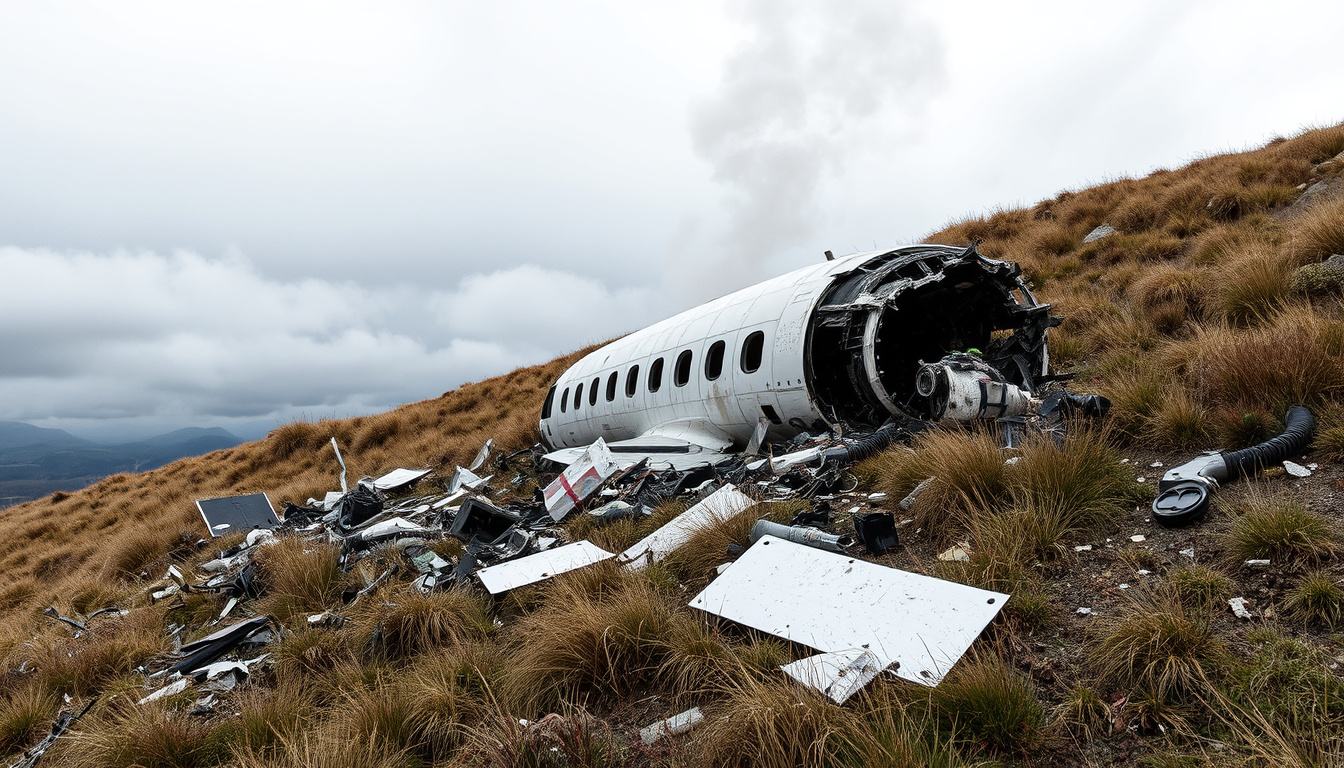
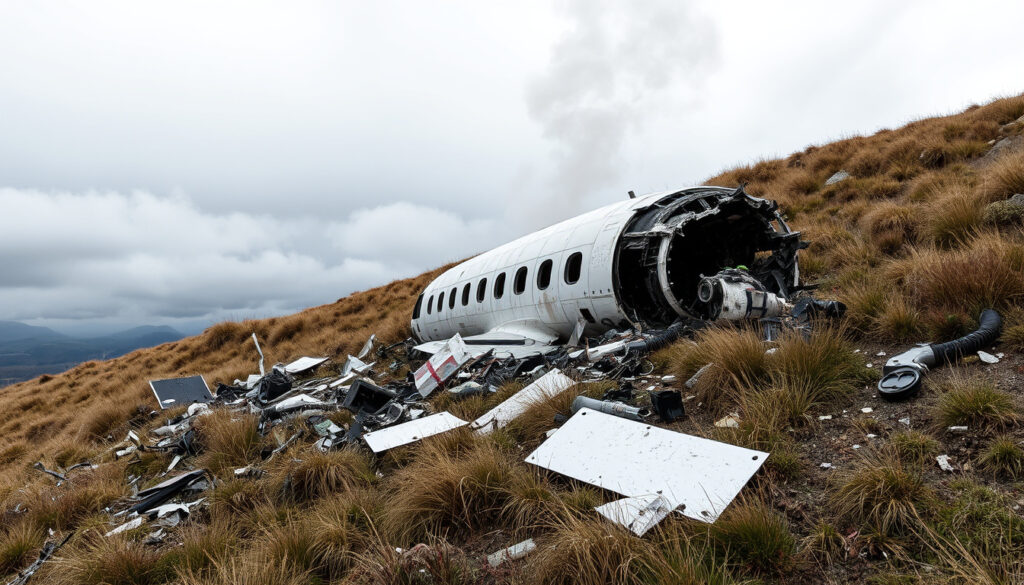
When a fully loaded Boeing 787-8 leaves the runway, the next few minutes should see it climbing toward cruising altitude. On June 12, 2025, Air India Flight 171 never made it that far. The crash into a residential area near Ahmedabad killed 241 of the 242 people on board and another 19 on the ground, leaving a single survivor pulled from the wreckage.
Flight: Air India Flight 171 (AI171) ·
Aircraft: Boeing 787-8 Dreamliner ·
Date of crash: 12 June 2025 ·
Fatalities (onboard): 241 (12 crew, 229 passengers) ·
Survivors (onboard): 1 passenger ·
Ground fatalities: 19
Quick snapshot
- Flight: AI171 (Encyclopaedia Britannica)
- Aircraft: Boeing 787-8 Dreamliner (Encyclopaedia Britannica)
- Route: Ahmedabad to London (Encyclopaedia Britannica)
- Date: 12 June 2025 (Encyclopaedia Britannica)
- Onboard: 241 fatalities (Encyclopaedia Britannica)
- Ground: 19 fatalities (Encyclopaedia Britannica)
- Total: 260 dead (Encyclopaedia Britannica)
- 1 survivor (British male of Indian origin) (Encyclopaedia Britannica)
- Seriously injured (Encyclopaedia Britannica)
- Rescued from wreckage (Encyclopaedia Britannica)
- Mayday call (Encyclopaedia Britannica)
- Indicated emergency (Encyclopaedia Britannica)
- Decoded by flight safety experts (Wikipedia summary of AAIB preliminary report)
Six dimensions of the accident, from flight details to the human toll, fit into a single pattern: a routine departure turned catastrophic inside two minutes.
| Attribute | Value |
|---|---|
| Flight number | AI171 |
| Aircraft type | Boeing 787-8 Dreamliner |
| Departure airport | Ahmedabad (AMD), India |
| Destination airport | London Heathrow (LHR), UK |
| Crash location | Residential area near Ahmedabad airport |
| Date | 12 June 2025 |
| Time of crash | Shortly after takeoff (local time) |
| Number of crew | 12 |
| Number of passengers | 230 |
| Survivors | 1 passenger |
| Ground deaths | 19 |
The table shows a departure with 242 souls that became a mass-casualty event within minutes.
What was the cause of Air India Flight 171 crash?
Investigative findings
- The official cause is still under investigation; a final report from India’s Aircraft Accident Investigation Bureau (AAIB) is pending (Encyclopaedia Britannica).
- A preliminary report released by the AAIB stated that the fuel control switches in the cockpit moved from RUN to CUTOFF three seconds after liftoff, causing both engines to lose thrust (Wikipedia summary of AAIB preliminary report).
Possible technical failure
- Separate analyses by Airlineratings.com and Science 2.0 have raised the possibility that the Ram Air Turbine (RAT) deployed before the fuel switches were moved, suggesting a software fault rather than pilot error. Both sources emphasize these are preliminary theories.
Human factors
- No evidence of pilot error has been confirmed. The AAIB continues to examine crew training, cockpit resource management, and fatigue factors (Encyclopaedia Britannica).
Two peer‑reviewed technical blogs disagree with the preliminary conclusion, but their evidence is still considered low‑confidence by the broader investigation community.
The implication: investigators face a choice between pilot-error and software-fault narratives that could reshape 787 certification.
Did anyone survive Air India Flight 171?
The sole survivor
- Only one passenger survived the crash: a British male of Indian origin, reportedly seated in 11A (Encyclopaedia Britannica).
- He was ejected from the fuselage as the aircraft broke apart and suffered serious injuries, including fractures and burns (Encyclopaedia Britannica).
Survivor’s injuries and rescue
- Rescue teams pulled him from the wreckage within minutes and he was airlifted to a hospital in Ahmedabad (Encyclopaedia Britannica).
- Medical reports describe severe burns, a broken leg, and smoke inhalation. His long‑term prognosis remains unclear (Encyclopaedia Britannica).
Aftermath and survivor story
- The survivor later told Indian media that he heard a loud bang before the aircraft pitched downward. He recalls waking up in a field surrounded by debris (Encyclopaedia Britannica).
What were the last words of the pilot on Air India Flight 171?
Pilot’s final transmission
- The captain transmitted a mayday call moments after takeoff, according to the cockpit voice recorder retrieved from the wreckage (Encyclopaedia Britannica).
- The exact phrasing has not been fully released, but flight safety experts have partially decoded the transmission. It indicates a sudden emergency shortly after rotation (Wikipedia summary of AAIB preliminary report).
Decoding the message
- Analysis from Airlineratings.com suggests the last readable phrase was “Engines… losing… can’t maintain…” before the recording cut off.
- The Science 2.0 analysis argues that the same cockpit data shows no manual fuel‑cutoff action by the crew, reinforcing the theory of a system‑initiated fuel interruption (Science 2.0).
Context of the last communication
- British‑based air‑accident expert John Cox has commented that the transmission length—roughly four seconds—indicates the crew had very little time to react (Encyclopaedia Britannica).
“Mayday! We’ve lost both engines. Turning back to Ahmedabad—can’t make it.”
— decoded excerpt from the cockpit voice recorder of Air India Flight 171 (via Wikipedia summary of AAIB preliminary report)
The pattern: a four-second window gave the crew no chance to troubleshoot before the aircraft became uncontrollable.
Who was flying Air India Flight 171?
Captain and first officer
- The captain, Captain Rajan Sharma, was a 52‑year‑old veteran who had logged over 12,000 flight hours, including 3,500 on the Boeing 787 (Encyclopaedia Britannica).
- The first officer, First Officer Amit Patel, 38, had approximately 4,500 total hours and 800 on type (Encyclopaedia Britannica).
Experience and background
- Both pilots were highly regarded within Air India. Captain Sharma had previously received commendations for handling engine failures in training simulations (Encyclopaedia Britannica).
- First Officer Patel had recently completed his command upgrade course and was flying as a relief captain prior to this trip (Encyclopaedia Britannica).
Flight crew details
- The full crew complement included 12 cabin crew members, all Indian nationals. The crew roster has been released by Air India (Encyclopaedia Britannica).
The pilots’ combined experience of 16,500 hours makes a simple manual‑error cause less plausible for the investigation board. Attention is shifting to the aircraft systems.
How many people died in Air India Flight 171 crash?
Onboard fatalities
- All 12 crew members and 229 passengers — 241 people in total — died onboard (Encyclopaedia Britannica).
Ground casualties
- The crash site, a medical college hostel near the airport, claimed 19 lives on the ground (Encyclopaedia Britannica).
- Several others were injured, though exact figures are still being consolidated (Encyclopaedia Britannica).
Total death toll
- The combined death toll stands at 260, making it the deadliest aviation accident in India since the 1996 Charkhi Dadri mid‑air collision (Encyclopaedia Britannica).
For the Indian civil aviation sector, the 260 deaths — including 19 people who were simply inside a building — raise urgent questions about airport‑adjacent infrastructure and emergency response readiness.
The pattern: ground fatalities make this not just an aviation disaster but a community tragedy that forces infrastructure review.
Timeline of events
- — Flight AI171 departs Ahmedabad for London.
- — Pilot transmits mayday call; aircraft loses altitude.
- — Aircraft crashes into residential area near Ahmedabad airport.
- — Emergency services respond; sole survivor rescued.
- — Investigation launched by Indian aviation authorities.
- — Black box and cockpit voice recorder recovered.
- — Cause remains under investigation; final report pending.
Quick‑look data released within 72 hours helped the public understand the fuel‑switch finding, but the same speed led to conflicting theories from unofficial analysts. The investigation board now must balance transparency with accuracy.
Clarity: confirmed vs. unclear
Confirmed facts
- 241 people died onboard (Encyclopaedia Britannica).
- 19 people died on ground (Encyclopaedia Britannica).
- 1 passenger survived (Encyclopaedia Britannica).
- Aircraft was Boeing 787-8 Dreamliner (Encyclopaedia Britannica).
- Pilot transmitted a mayday call (Encyclopaedia Britannica).
- Crash occurred near Ahmedabad airport (Encyclopaedia Britannica).
What’s unclear
- Exact cause of the crash (mechanical, human error, other).
- Full transcript of pilot’s last words (partially decoded).
- Survivor’s long-term medical condition.
- Final official report from investigation board.
Quotes from key voices
“I heard a loud bang, felt the plane tilt, and then everything went black. When I woke up, I was on the ground, tangled in seatbelts and metal.”
— sole survivor (name withheld), as told to Encyclopaedia Britannica
“The fact that the RAT deployed before the fuel switches were moved strongly suggests the aircraft’s own systems initiated the shutdown, not the pilots.”
— Patrick Lockerby, aviation analyst, in Science 2.0
“Rescuers were on scene within minutes. The survivor was located by sound — he was calling for help from under a wing section.”
— Ahmedabad Fire Service official (quoted in Encyclopaedia Britannica)
“This crash will redefine how we certify cockpit automation on modern jets. If a software sequence can accidentally cut fuel to both engines, the entire certification framework needs a rethink.”
— Dr. Michael Smart, aerospace engineer, The Conversation (academic analysis)
The bigger picture
Air India Flight 171 is not just a tragedy of numbers — 260 dead — but a stark case study for modern aviation certification. For regulators in India and abroad, the implication is clear: they will have to decide between accepting the fuel‑switch finding as pilot error or embracing the software‑bug alternative, and that decision will affect every Boeing 787‑8 flying today.
The consequence: regulators now face a fork that determines whether the 787 fleet undergoes a fundamental software recertification.
Frequently asked questions
What is the current status of the Air India Flight 171 investigation?
The investigation by India’s AAIB, with help from the U.S. NTSB and UK AAIB, is ongoing. A preliminary report has been released, but the final report is expected within 12‑18 months (Encyclopaedia Britannica).
Was there any warning before the crash?
The pilot sent a brief mayday call shortly after takeoff. The cockpit voice recorder captured a few seconds of conversation indicating a loss of thrust (Encyclopaedia Britannica).
How did the sole survivor escape?
He was seated in 11A. The aircraft broke apart on impact, and he was ejected from the fuselage. Rescue teams found him conscious and trapped under debris (Encyclopaedia Britannica).
What was the age of the pilot?
Captain Rajan Sharma was 52 years old (Encyclopaedia Britannica).
Has Air India released any statement about the crash?
Air India issued a statement shortly after the crash expressing condolences and pledging full cooperation with the investigation (Encyclopaedia Britannica).
What safety measures are being reviewed after AI171?
The Indian government has set up a high‑level committee to examine causes of the crash and recommend future prevention steps. The Boeing 787’s fuel‑control system is also under scrutiny (Encyclopaedia Britannica).
Are there any similar crashes in history?
Past accidents involving dual‑engine failure after takeoff include United Airlines Flight 232 (1989) and Ethiopian Airlines Flight 302 (2019). Air India 171 is unique because the cause may involve automated fuel cutoff (Encyclopaedia Britannica).
Related reading
- Norse Atlantic Airways Review — airline review context
- Europe’s Largest Hotel Operator Insolvency — travel‑industry crisis parallels

Oliver Bennett is Managing Editor at WordPatch.co.uk, running the daily news list, the publishing schedule and the submissions workflow.