When U.S. troops pulled a disheveled man from a cramped underground hiding spot near Tikrit in December 2003, the world saw a dictator who had ruled Iraq with an iron fist for nearly a quarter-century. That moment ended one chapter and opened another — one defined by a trial, a hanging, and a lingering question about the war that removed him, and the following separates the documented facts from the politically charged allegations that shaped his legacy.
Born: April 28, 1937 · Died: December 30, 2006 · Presidency: 1979–2003 · Execution method: Hanging · Height: 1.93 m (6 ft 4 in) · Religion: Sunni Islam (nominal)
Quick snapshot
- Captured by U.S. forces on December 13, 2003 (Defense Intelligence Agency)
- Executed by hanging on December 30, 2006 (Encyclopaedia Britannica)
- Denied any operational link with al-Qaeda in post-capture FBI interviews (National Security Archive)
- Capture announced publicly by L. Paul Bremer: “Ladies and gentlemen, we got him!” (Defense Intelligence Agency)
- Execution sentence handed down November 5, 2006, carried out within 56 days (Defense Intelligence Agency)
- Ongoing historical reassessment of the war’s justification and the al-Qaeda narrative
Seven key facts, one pattern: the public narrative diverged sharply from what intelligence agencies later confirmed.
| Label | Value |
|---|---|
| Full name | Saddam Hussein Abd al‑Majid al‑Tikriti |
| Born | April 28, 1937 |
| Died | December 30, 2006 |
| Spouse | Sajida Talfah |
| Children | Uday, Qusay, Rana, Raghad, Hala |
| Political party | Ba’ath Party |
| Religion | Sunni Islam (nominal) |
What did Saddam say before he died?
What were the saddest last words?
Witness accounts of Saddam Hussein’s final moments vary in detail, but they converge on a few elements. According to a CNN report published the same day, guards taunted him and he argued with them before the trapdoor opened. One witness reported hearing him say “Muqtada al-Sadr” in a mocking tone. A later Time retrospective described his last words as a profanity-laden political boast. Most accounts agree he uttered “Allahu Akbar” and a phrase about Palestine.
The conflicting versions matter because they reflect a deeper dispute over how to frame his death — as a martyr’s end or a tyrant’s final defiance. For historians, the lack of a single authoritative transcript weakens the evidentiary record.
Bottom line: Saddam’s last words remain contested among multiple sources. No single version can be confirmed without an official transcript.
What was Saddam Hussein famous for?
Key aspects of his notorious rule
Saddam Hussein’s 24-year presidency is defined by three major conflicts and systemic human rights abuses. He launched the Iran–Iraq War in 1980, a brutal eight-year stalemate in which Iraq reportedly used chemical weapons against Iranian forces and Kurdish civilians. In August 1990 he ordered the invasion of Kuwait, triggering the Gulf War and a decade of crippling UN sanctions. Domestically, his regime was marked by mass executions, torture, and a pervasive cult of personality.
The Defense Intelligence Agency places the total death toll from the Iran–Iraq War alone in the hundreds of thousands. The Anfal campaign against Kurds in the late 1980s killed an estimated 50,000–100,000 people.
Saddam’s methods set a regional precedent for using state violence to suppress dissent. The international community’s failure to intervene during the Anfal campaign later became a reference point for the Responsibility to Protect doctrine.
Bottom line: Saddam Hussein’s notoriety stems from his willingness to use any means — chemical weapons, mass arrests, invasion — to preserve power. The human cost, by conservative estimates, runs into the hundreds of thousands.
Why did the US dislike Saddam Hussein?
Roots of the conflict
U.S. opposition to Saddam Hussein was not constant. During the 1980s, Washington provided intelligence and material support to Iraq in its war with Iran. The relationship soured after Iraq’s invasion of Kuwait in 1990. After the 1991 Gulf War, the U.S. maintained a policy of containment through sanctions and no-fly zones. The tipping point came after the September 11 attacks. The Bush administration publicly justified the 2003 invasion by citing Saddam’s alleged weapons of mass destruction programs and purported ties to al-Qaeda.
A U.S. congressional resolution later stated that officials had “deceived the public” about the relationship. The resolution also noted that a Presidential Daily Briefing had described “scant credible evidence” of significant collaboration with al-Qaeda.
Bottom line: U.S. policy shifted from support to regime change, but the intelligence underpinning the 2003 invasion was later shown to be flawed. The official justification — WMDs and terrorist links — did not match the evidence uncovered after the invasion.
Who is Saddam Hussein and what happened to him?
Biography overview
Saddam Hussein was born on April 28, 1937, in the village of Al‑Awja near Tikrit. He joined the Ba’ath Party as a young man and rose through its ranks. In 1979 he became president after President Ahmed Hassan al‑Bakr resigned. His rule ended when U.S. forces launched Operation Iraqi Freedom in March 2003. Baghdad fell in April, and Saddam went into hiding.
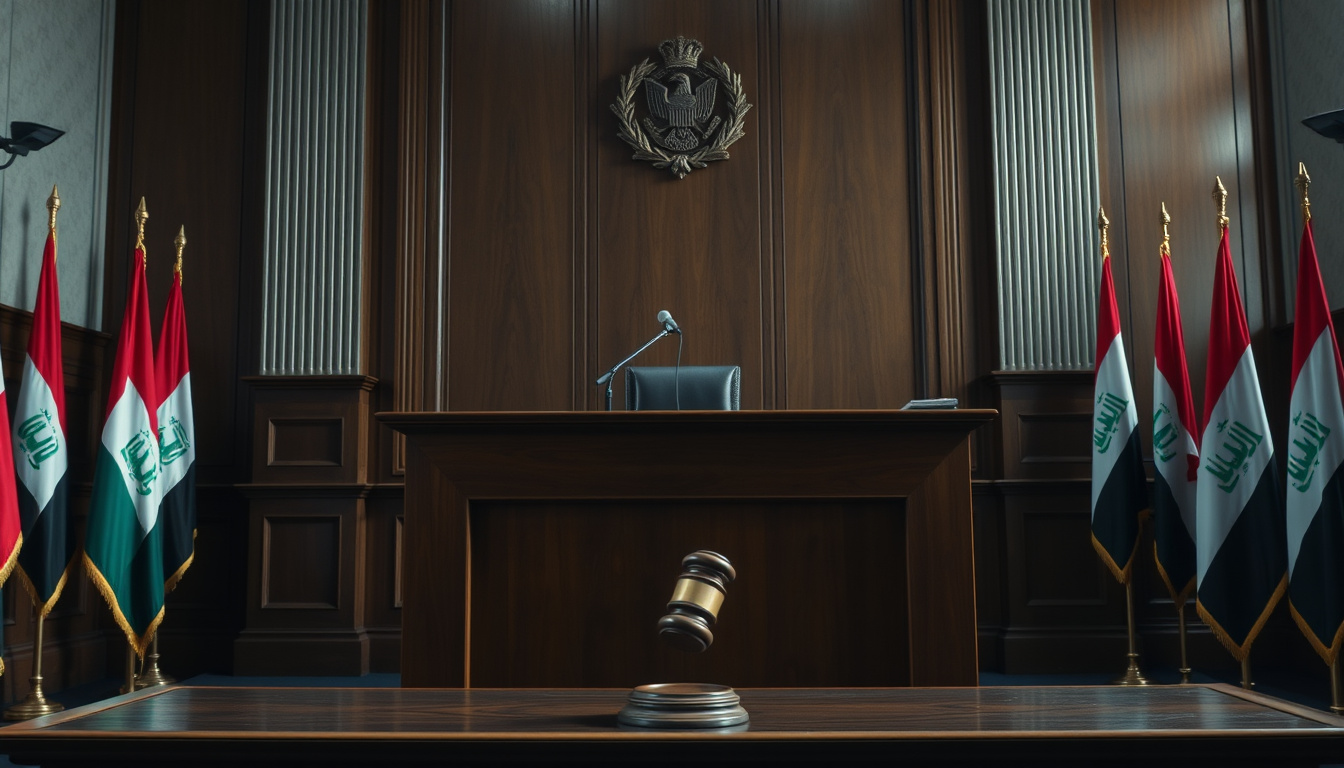
He was captured on December 13, 2003, during Operation Red Dawn. Found in a narrow underground hideout near Ad‑Dawr, he offered no resistance. The Iraqi Special Tribunal tried him for crimes against humanity, specifically the Dujail massacre of 1982. He was found guilty and sentenced to death by hanging, a sentence carried out on December 30, 2006.
Bottom line: From rural origins to a 24-year dictatorship and a swift downfall, Saddam’s trajectory reflects the instability of post‑colonial Middle Eastern politics and the consequences of overreaching military ambition.
How did Saddam Hussein eat in his hiding spot?
Details of his fugitive life
During the nine months between the fall of Baghdad and his capture, Saddam Hussein moved among safe houses and relied on a network of loyalists. At the time of his capture, he was living in a small underground hideout often described as a “spider hole.” The Defense Intelligence Agency account notes that he was disoriented and had a pistol with him but did not use it. Local sympathizers brought him food and supplies. Reports indicate he had access to basic canned goods and water, but no elaborate provisions.
The physical conditions — a cramped hole with limited ventilation — stood in stark contrast to the palaces he once occupied. This asymmetry became a powerful symbol of his fall.
Bottom line: Saddam’s fugitive existence was modest and improvised. The “spider hole” image reinforced the narrative of a once‑fearsome dictator reduced to hiding in a hole.
What did Osama bin Laden say about Saddam Hussein?
Al-Qaeda links and allegations
The U.S. government repeatedly suggested before the Iraq War that Saddam Hussein’s regime had ties to al-Qaeda. After the invasion, however, multiple investigations found no evidence of an operational relationship. FBI interviews conducted after Saddam’s capture recorded him denying any affiliation or cooperation with al-Qaeda. The National Security Archive summarizes that CIA investigators found “no credible supporting evidence” for an operational link.
Osama bin Laden himself viewed Saddam as an apostate. In a 2004 audio message, he condemned the Iraqi Ba’athist regime as secular and distanced al-Qaeda from any collaboration. The ideological chasm between bin Laden’s Salafi‑jihadism and Saddam’s Arab nationalism made a strategic alliance unlikely.
By linking Saddam to 9/11, the Bush administration built public support for the invasion. But the subsequent absence of evidence eroded domestic and international trust in U.S. intelligence. For counterterrorism analysts, the episode remains a cautionary case of policy driving intelligence assessment rather than the reverse.
Bottom line: The alleged Saddam–al-Qaeda connection was not supported by available evidence. Both Saddam’s own statements and the post‑war record contradict the pre‑war narrative.
Timeline
- April 28, 1937: Born near Tikrit, Iraq.
- 1979: Becomes President of Iraq after Ahmed Hassan al‑Bakr resigns.
- 1980–1988: Iran–Iraq War; Iraq uses chemical weapons.
- August 2, 1990: Invasion of Kuwait triggers Gulf War.
- 1991: Gulf War ends; Iraq faces sanctions.
- March 20, 2003: US‑led invasion of Iraq begins.
- December 13, 2003: Captured near Tikrit in a spider hole.
- October 19, 2005: Trial begins before the Iraqi Special Tribunal.
- November 5, 2006: Sentenced to death for crimes against humanity.
- December 30, 2006: Executed by hanging in Baghdad.
Confirmed facts vs. What’s unclear
Confirmed facts
- Saddam Hussein was captured by U.S. forces on December 13, 2003, near Ad‑Dawr (Defense Intelligence Agency).
- He was executed by hanging on December 30, 2006, after conviction by the Iraqi High Tribunal (Encyclopaedia Britannica).
- He denied any operational link with al-Qaeda in multiple FBI interviews (National Security Archive).
What’s unclear
- Exact wording of his last words — witness accounts conflict (CNN, Time).
- Whether Iraq had active WMD programs in 2003 — no stockpiles were found.
- The full extent of any indirect contact between his regime and al-Qaeda figures.
Quotes
“Ladies and gentlemen, we got him!”
— L. Paul Bremer, announcing the capture on December 13, 2003 (Defense Intelligence Agency)
“Muqtada al-Sadr” — mocking taunt reported by an execution witness.
— Witness account reported by CNN
“I have no connection with al-Qaeda. If there was any, it was our enemy.”
— Saddam Hussein, as recorded in FBI interviews (National Security Archive)
Summary
The legacy of Saddam Hussein is inseparable from the war that removed him. The false claim of an al-Qaeda link, combined with the failure to find WMDs, continues to shape public trust in government intelligence. For policymakers in the Middle East and the West, the lesson is clear: war rationales matter long after the fighting ends, and the cost of misrepresenting intelligence is measured in thousands of lives and decades of regional instability.
en.wikipedia.org, facebook.com, ebsco.com, youtube.com, reddit.com, thenation.com, nippontrenddaily.com
For a deeper look at what happened to his relatives after his death, see Saddam Husseins family fate.
Frequently asked questions
How did Saddam Hussein come to power?
He rose through the Ba’ath Party, became head of the internal security apparatus, and leveraged a purge of rivals to assume the presidency in 1979 after al‑Bakr resigned.
What was the Iran‑Iraq War about?
A territorial and ideological conflict that started when Iraq invaded Iran in 1980. It ended in a stalemate after eight years and cost hundreds of thousands of lives.
Why was Saddam Hussein executed?
The Iraqi High Tribunal convicted him of crimes against humanity for the 1982 Dujail massacre, in which 148 Shia villagers were killed.
What were the charges against Saddam Hussein?
Crimes against humanity, specifically the murder and torture of Dujail residents, and later additional charges for the Anfal campaign and suppression of Kurds.
Where was Saddam Hussein captured?
He was captured in a small underground hideout near Ad‑Dawr, close to his hometown of Tikrit, during Operation Red Dawn.
Did Saddam Hussein have weapons of mass destruction?
Post‑war inspections found no stockpiles. Pre‑war intelligence was later acknowledged to be flawed.
How many people died under Saddam Hussein’s rule?
Estimates range from 250,000 to over 500,000, including deaths from wars, chemical attacks, and political repression.
Related reading
- Hermann Göring: Life, Crimes, Trial, and Death at Nuremberg — Another dictator who faced trial and a violent end after a devastating war.
- Che Guevara: Revolutionary, Icon, and Controversial Figure — A revolutionary whose capture and execution follow a similar arc of downfall.

Freddie Clarke is Senior Reporter at WordPatch.co.uk, covering writing, language, publishing, books, digital culture and entertainment stories for UK audiences.