Double cream is a kitchen staple that many home cooks purchase in quantities larger than immediately needed. The question of whether freezing this dairy product is viable comes up frequently, particularly when leftover cream threatens to spoil before use. Understanding the proper techniques for freezing and thawing double cream can help reduce waste while preserving as much quality as possible for future recipes.
The reality is that double cream can be frozen, though the process does affect its texture and performance in certain applications. The high fat content typical of double cream—usually around 48 percent—actually aids the freezing process compared to lower-fat alternatives. However, some compromises in quality are inevitable, and knowing what to expect helps ensure satisfactory results in the kitchen.
Can You Freeze Double Cream?
Yes, double cream can be frozen successfully, but with important limitations that home cooks should understand before proceeding. Freezing damages the emulsion that gives cream its characteristic smooth texture, which means the thawed product will not behave identically to fresh cream in all applications. The extent of quality changes depends largely on the freezing method chosen and how the cream will ultimately be used.
Freezing double cream in whipped form produces better results than freezing liquid cream. Whipped cream maintains its structure more reliably after thawing and offers greater versatility for dessert applications.
Overview of Freezing Double Cream
Yes, but with limitations on texture and whipping ability
Whipped form for desserts; liquid in ice cube trays for cooking
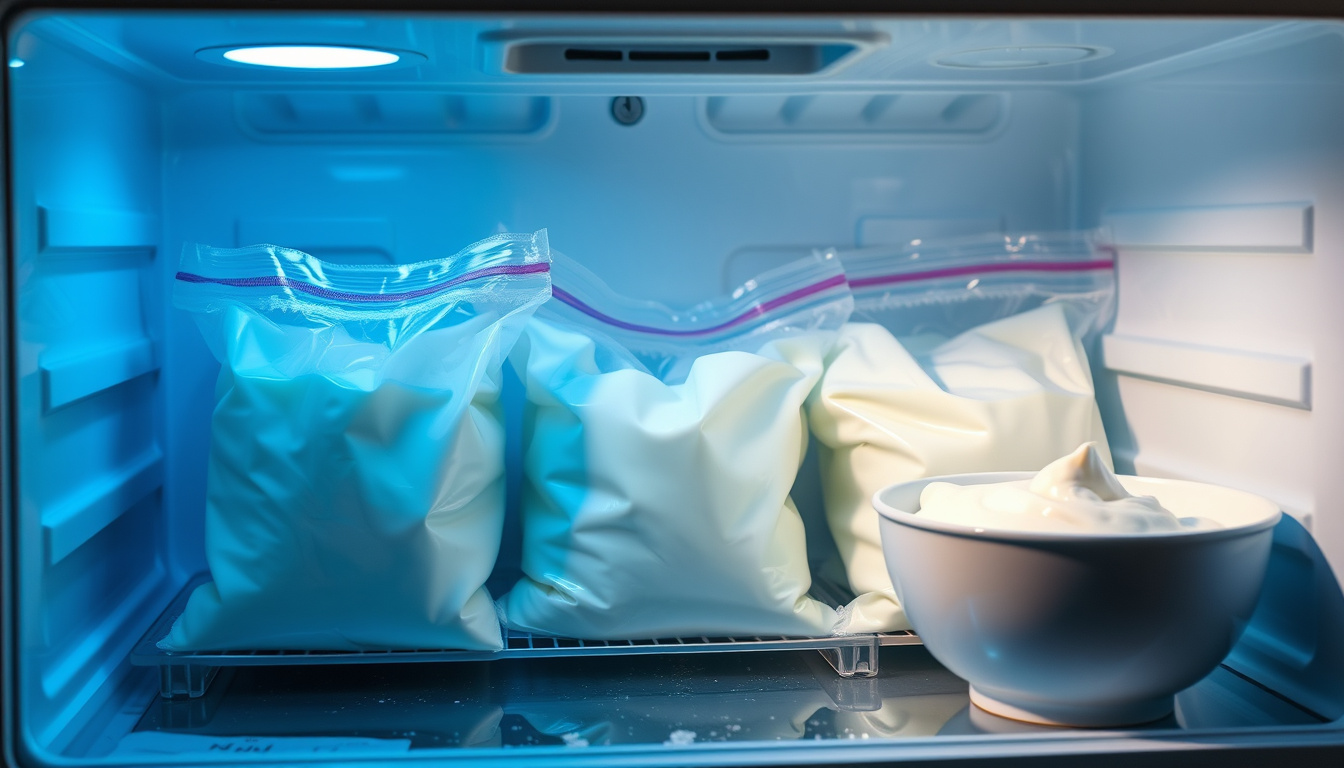
Up to 3 months in airtight freezer bags
Best for cooking; whipping results variable
Key Insights
- Double cream freezes better than single cream due to its higher fat content
- Freezing in portion-sized amounts prevents waste and allows flexible use
- Ice crystal formation during freezing causes fat molecules to clump together
- Thawed cream works excellently in soups, sauces, and baked goods where texture changes are less noticeable
- Whipped cream frozen in dollops thaws quickly and maintains presentation quality
- Avoid freezing entire cartons if possible—portion control yields better results
- Never re-freeze cream that has already been thawed and whipped
Quick Reference Facts
| Aspect | Details |
|---|---|
| Fat content impact | High fat (48%) aids freezing but increases risk of separation |
| Ideal container | Airtight freezer bags or silicone ice cube trays |
| Recommended thaw time | Overnight in refrigerator (8-12 hours) |
| Shelf life post-thaw | 2-3 days refrigerated |
| Maximum frozen storage | 3 months for best quality |
| Whipping after thaw | Unreliable; will not achieve same firmness as fresh |
How to Freeze Double Cream Properly
The method chosen for freezing double cream significantly impacts the final quality and usability of the product. Two primary approaches exist, each suited to different end uses. Selecting the appropriate technique depends largely on how the cream will be consumed once thawed.
Freezing Whipped Double Cream
Whipping the cream before freezing produces the most reliable results for dessert applications. According to Nigella Lawson, this approach allows the frozen cream to maintain its structure better than liquid cream that is thawed and whipped later.
The process begins by whipping the cream until stiff peaks form. Adding a stabilizer such as cream of tartar or a small amount of icing sugar before whipping helps the frozen product remain firmer and extends its shelf life. The whipped cream is then dolloped onto a parchment-lined baking sheet in individual portions.
Once the dollops are firm—typically after two to three hours in the freezer—they should be transferred to an airtight container or freezer bag. Removing as much air as possible from the bag prevents freezer burn and helps preserve flavor. These frozen dollops can be placed directly onto desserts just before serving or stirred into hot beverages where they melt quickly.
Freezing Liquid Double Cream
When the cream will be used primarily for cooking rather than whipping, freezing it in liquid form offers convenience and portion flexibility. Platings and Pairings recommends using ice cube trays or silicone molds for this purpose.
Pour the cream into ice cube trays, filling each compartment to approximately three-quarters capacity. This space accommodates expansion during the freezing process and prevents messy overflow. Silicone molds work particularly well because they release the frozen cubes easily once solid.
After the cubes freeze completely—usually within four to six hours—transfer them to a labeled freezer bag. Labeling with the date ensures you use the oldest portions first and helps track how long the cream has been stored. Alternatively, an unopened pot of double cream can be placed directly in the freezer in its original packaging, though this limits portion control. BBC Good Food notes that portioning cream before freezing provides much greater flexibility when cooking.
Flat freezing bags of frozen cream cubes allows for more efficient storage space and makes it easier to stack containers in the freezer.
Can You Whip Double Cream After Freezing?
This question represents one of the most significant limitations of freezing double cream. The honest answer is that whipping double cream after freezing and thawing does not produce the same results as whipping fresh cream. The fat molecules, which are essential for creating the stable air pockets that give whipped cream its structure, undergo changes during the freezing and thawing process that diminish their functionality.
What Happens to Whipping Ability
According to Just Spices, defrosted cream will not whip as well as fresh cream and will not firm up in the same way. The ice crystals that form during freezing cause the fat globules to clump together rather than remaining evenly distributed throughout the liquid.
When water molecules in cream freeze, they crystallize and expand, which breaks the homogenization process that normally keeps fat evenly distributed. This separation means that even if the cream eventually whips, it will be grainier and less stable than cream that was never frozen.
If you require reliably firm whipped cream for decorating cakes or topping desserts, freezing already-whipped cream in dollop form represents the superior approach. These frozen dollops thaw rapidly and maintain their shape well enough for most garnishing purposes, even if they will not hold intricate piped designs quite as crisply as freshly whipped cream. Serious Eats confirms that pre-frozen whipped cream remains the best option for maintaining presentation quality.
Quality Changes After Thawing
Beyond whipping ability, several texture changes occur when double cream thaws. The cream often separates, with visible liquid pooling at the bottom of the container. The consistency becomes thinner than the original product, and graininess may develop where fat molecules have clumped together during storage.
These changes matter less in cooked applications where the cream will be heated. Heat helps break down fat molecules and creates smooth, integrated sauces and soups. Many home cooks who freeze double cream use it exclusively for cooking purposes, accepting the texture limitations as irrelevant to their intended preparations.
Never re-freeze cream that has been thawed and whipped. Once the whipping and thawing cycle is complete, any remaining cream should be used within two to three days or discarded.
How Long Does Frozen Double Cream Last?
Frozen double cream maintains acceptable quality for approximately three months when stored properly in airtight containers. Beyond this timeframe, deterioration becomes more pronounced as ice crystals grow larger and the fat emulsion continues to break down.
Storage Guidelines
The quality degradation is gradual but measurable. According to Platings and Pairings, the longer cream remains frozen, the more ice crystals form, which increases the risk of separation and texture degradation when thawed. Using frozen cream within the first month or two generally yields the best results.
Proper storage containers make a meaningful difference in how long frozen cream maintains its quality. Airtight freezer bags from which excess air has been expelled perform better than standard containers with less secure seals. Freezer burn, caused by air exposure, leads to off-flavors and textural changes that make the cream less pleasant to use even if it remains technically safe.
Labeling containers with the freezing date serves practical purposes beyond simple organization. The fat content in cream means it can absorb surrounding odors from other freezer contents if stored uncovered or in porous containers. Knowing the exact age of frozen cream helps prioritize usage and prevents forgotten containers from lingering indefinitely.
Post-Thaw Shelf Life
Once thawed in the refrigerator, frozen double cream should be used within two to three days. This timeline mirrors the storage recommendations for fresh double cream and reflects the fact that the thawing process itself does not reset the clock on the product’s usable life. Refrigerated storage remains essential after thawing, as room temperature acceleration of spoilage occurs just as with fresh dairy products.
Understanding the Science: What Happens When You Freeze Double Cream
The transformation that occurs when double cream freezes involves fundamental changes to its structure at the molecular level. The Modernist Pantry explains that this process centers on the emulsion that gives cream its smooth, uniform texture.
The Emulsion Breakdown
Double cream is an emulsion—a stable mixture of fat droplets dispersed throughout a water-based liquid. This emulsion is what allows cream to flow smoothly and incorporate air when whipped. Freezing disrupts this delicate balance because water and fat respond differently to cold temperatures.
When water molecules freeze, they expand as they crystallize. This expansion physically forces apart the fat droplets that were carefully distributed during homogenization. The fat globules, no longer held in their intended arrangement, begin to clump together. This clumping is what creates the grainy texture that many people notice in thawed cream.
Why Higher Fat Content Helps
Double cream, with its approximately 48 percent fat content, actually freezes better than lower-fat alternatives like single cream or half-and-half. The higher proportion of fat means there are more fat molecules available to help the emulsion reconstitute partially when thawed, even if it never returns to its original state entirely.
Lower-fat dairy products have more water content and fewer fat molecules to maintain structure. This is why recipes specifically recommend double or heavy cream for freezing purposes—single cream or milk will produce noticeably inferior results with significant separation and watery texture after thawing.
The freezing process itself does not make cream unsafe to consume. The product remains safe as long as it was fresh when frozen and was stored at consistent freezing temperatures throughout storage.
Thawing Frozen Double Cream Safely
Proper thawing methods significantly influence the final quality of double cream. The goal is to bring the frozen product back to liquid form while minimizing the separation and texture changes that cannot be entirely avoided.
Refrigerator Thawing (Recommended)
The safest and most recommended thawing method involves transferring frozen cream cubes or containers to the refrigerator and allowing them to thaw slowly overnight or over the course of one to two days. This gradual temperature transition causes less shock to the emulsion structure and results in better overall texture.
Place the frozen cream in a container to catch any liquid that may separate during the process. This container also prevents the cream from absorbing odors from other refrigerator contents. A clean bowl or jar works well for this purpose and makes it easy to stir the cream once fully thawed.
Quick Thawing Methods
When time is limited, faster thawing methods can be employed, though they may result in slightly inferior texture. The cold water bath method involves placing the sealed freezer bag in a bowl of cold water, changing the water every thirty minutes until the cream thaws. This is faster than refrigerator thawing but slower than applying direct heat.
Microwave thawing is possible using short, low-power intervals. Heat the cream in thirty-second bursts, stirring between each interval to distribute warmth evenly. High power or prolonged heating will cook the edges of the cream and create undesirable texture changes throughout.
Direct Addition to Hot Dishes
One of the most convenient aspects of frozen cream is that frozen cubes can often be added directly to hot dishes without thawing first. Just Spices confirms that frozen cream cubes work well when added directly to soups, stews, and sauces.
This approach eliminates the need for separate thawing entirely. The hot cooking liquid melts the frozen cream quickly, and the cooking heat helps integrate the fat molecules more smoothly than gentle thawing would. The result is often indistinguishable from using fresh cream in cooked dishes.
When Frozen Double Cream Works Best
Understanding which applications suit thawed double cream helps maximize the utility of frozen stock. Not all uses are equally forgiving of the textural changes that freezing introduces.
Ideal Uses for Thawed Cream
Soups and sauces represent the most forgiving applications for frozen double cream. The cooking process smooths out texture irregularities and allows the fat to integrate naturally into the dish. Cream-based soups, pasta sauces, and gravy all work well with thawed cream that may have separated slightly.
Baking applications also handle frozen cream effectively. Scones, biscuits, and certain cakes benefit from the fat content of cream without requiring the smooth whipped texture that desserts demand. The heat of baking serves a similar integrating function to cooking, blending the slightly altered cream into the final product.
Hot beverages such as coffee or hot chocolate readily accept thawed double cream. The cream melts quickly in the hot liquid and incorporates smoothly, making frozen whipped cream dollops or thawed cubes equally suitable for this purpose.
Applications to Avoid
Fresh whipped cream toppings requiring firm peaks, elaborate cake decorations, or presentations where smooth texture matters should not rely on thawed double cream. The variable whipping ability and potential graininess will be most noticeable in these contexts.
Uncooked preparations like salad dressings or cold sauces also reveal the limitations of thawed cream more clearly than cooked dishes do. The temperature factor that helps integrate fat in cooking is absent in cold preparations.
Summary
Double cream can be frozen successfully with proper techniques, though some compromise in texture and whipping ability is inevitable. Freezing in whipped form produces better dessert results, while freezing in ice cube trays offers convenient portioning for cooking applications. Storage should not exceed three months for optimal quality, and refrigerator thawing provides the best texture results. Thawed cream works particularly well in cooked dishes like soups and sauces where heat helps integrate any separated fat. Those interested in related food storage topics may find our guide to Is Sunflower Oil Bad for You useful for comparison with other kitchen staples. For local dining options when cooking from scratch feels like too much effort, exploring Best Fish and Chips Near Me provides practical alternatives.
Frequently Asked Questions
How do you defrost double cream safely?
Transfer frozen cream to the refrigerator and allow it to thaw slowly overnight or for 1-2 days. This gentle method minimizes separation and preserves the best possible texture for cooking use.
What happens when you freeze double cream?
Freezing breaks the emulsion in cream, causing fat molecules to clump together and water to crystallize. This results in grainier texture, possible separation, and reduced whipping ability after thawing.
Can you freeze double cream in its original container?
Yes, unopened double cream can be frozen directly in its original pot. However, portioning into ice cube trays or freezer bags offers better portion control and more flexible usage options.
Does frozen double cream need to be stirred before use?
Yes, thawed double cream often separates with liquid pooling at the bottom. Stirring before use helps redistribute the fat and creates a more uniform consistency for cooking or baking applications.
Can you refreeze double cream after thawing?
Once thawed, double cream should not be refrozen. The freezing and thawing cycle already compromises the emulsion structure, and additional cycles would cause further significant deterioration.
Why does double cream freeze better than single cream?
Double cream contains approximately 48 percent fat compared to single cream’s lower fat content. The higher fat proportion means more fat molecules help partially reconstitute the emulsion when thawed, producing better texture results.
Can you freeze cream that has already been whipped and thawed?
No, cream that has been whipped after thawing should not be refrozen. The whipping process further destabilizes the emulsion, and refreezing would cause severe quality degradation.
What is the best way to use frozen double cream?
Frozen and thawed double cream works best in cooked applications like soups, sauces, and baked goods. The heat helps integrate any separated fat and masks textural changes that would be more noticeable in raw or cold preparations.

Oliver Bennett is Managing Editor at WordPatch.co.uk, running the daily news list, the publishing schedule and the submissions workflow.