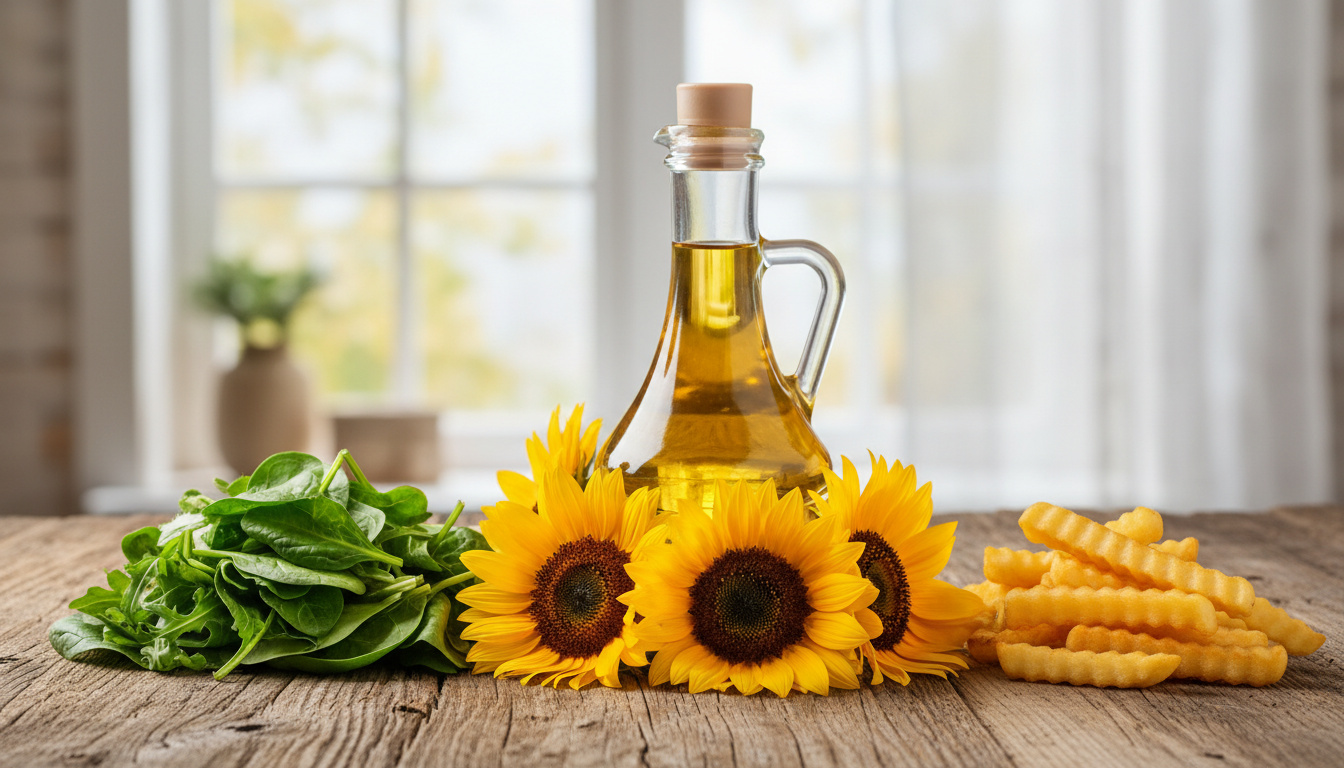

Sunflower oil dominates supermarket shelves and commercial kitchens, yet its health implications remain widely misunderstood. While certain formulations demonstrate cardiovascular benefits, others may contribute to inflammatory responses when consumed in excess.
The critical distinction lies in fatty acid composition. High-oleic varieties contain predominantly monounsaturated fats, whereas high-linoleic versions deliver substantial omega-6 polyunsaturated fatty acids that alter physiological responses.
Clinical evidence from the American Heart Association and peer-reviewed journals reveals a nuanced profile that resists simple categorization. Understanding these variations enables informed dietary choices aligned with individual health objectives.
Is Sunflower Oil Healthy or Bad for You?
Primarily polyunsaturated and monounsaturated fats with significant vitamin E content
Affordable, neutral flavor profile, and cholesterol-modulating potential
Omega-6 fatty acid imbalance risks in standard varieties
Moderate-heat cooking applications using high-oleic formulations
Research indicates that high-oleic sunflower oil improves lipid profiles when replacing saturated fats, while high-linoleic types may exacerbate existing omega-6 to omega-3 imbalances common in Western dietary patterns. Healthline notes that variant selection determines whether the oil supports or potentially compromises metabolic health.
Essential Insights
- High-oleic cultivars contain 70% or more monounsaturated oleic acid, supporting cardiovascular function
- High-linoleic varieties provide excessive omega-6 fatty acids linked to inflammatory pathways in some studies
- The FDA permits qualified health claims regarding coronary heart disease risk reduction for high-oleic formulations
- Vitamin E content provides antioxidant protection at approximately 5.6 milligrams per tablespoon
- Refined versions achieve smoke points near 450°F, while unrefined varieties degrade at lower temperatures
- Clinical trials demonstrate measurable lipid improvements within 8-10 weeks of dietary substitution
- Typical Western diets already maintain omega-6 to omega-3 ratios approaching 20:1
Nutritional Profile by Variant
| Nutrient | Amount per tbsp | % Daily Value |
|---|---|---|
| Calories | 120 | — |
| Total Fat | 14g | 18% |
| Saturated Fat | 1g | 5% |
| Monounsaturated Fat (High-Oleic) | 10-11g | — |
| Polyunsaturated Fat (High-Linoleic) | 9-10g | — |
| Vitamin E | 5.6mg | 37% |
| Smoke Point (Refined) | 450°F / 232°C | — |
What Are the Health Benefits of Sunflower Oil?
Cardiovascular and Cholesterol Modulation
High-oleic sunflower oil demonstrates measurable efficacy in improving serum lipid profiles. Randomized controlled trials indicate that substituting saturated fats with high-oleic varieties reduces low-density lipoprotein (LDL) cholesterol and triglycerides while elevating high-density lipoprotein (HDL) levels. GoodRx reports that these effects manifest within 8-10 weeks of consistent dietary integration.
The American Heart Association recommends obtaining 5-10% of daily caloric intake from linoleic acid, an omega-6 fatty acid present in moderate amounts in certain sunflower oil variants. This intake level correlates with reduced coronary heart disease risk in epidemiological studies.
Antioxidant Protection
Sunflower oil delivers substantial vitamin E, primarily as alpha-tocopherol, which functions as a lipid-soluble antioxidant. WebMD notes that this compound protects cellular membranes from oxidative damage, potentially reducing inflammatory markers when consumed as part of a balanced diet.
Select oils explicitly labeled “high-oleic” or “NuSun” to maximize monounsaturated fat intake while minimizing omega-6 exposure. These varieties demonstrate superior oxidative stability, making them appropriate for sautéing and light frying without generating harmful degradation products.
Dermatological Applications
Topical application of sunflower oil demonstrates emollient properties that support skin barrier function. The vitamin E content may reduce ultraviolet-induced oxidative stress when applied to epidermal tissues, though dietary consumption provides more systemic antioxidant distribution.
Potential Risks and Side Effects of Sunflower Oil
Inflammation and Omega-6 Concerns
High-linoleic sunflower oil contains significant concentrations of omega-6 fatty acids that convert to arachidonic acid, a precursor for pro-inflammatory eicosanoids. Research published in PMC indicates that mice consuming high-linoleic sunflower oil exhibited inflammatory markers despite showing improved lipid profiles, suggesting complex metabolic effects.
Western dietary patterns typically present omega-6 to omega-3 ratios approaching 20:1, significantly higher than the evolutionary baseline of approximately 1:1. Some researchers associate this imbalance with increased risks of cardiovascular disease, obesity, and neurodegenerative conditions, though consensus remains incomplete.
Standard high-linoleic sunflower oil exacerbates existing fatty acid imbalances in typical Western diets. Regular consumption without compensatory omega-3 intake may perpetuate inflammatory physiological states, particularly in individuals with existing metabolic syndrome markers.
Oxidative Degradation
Polyunsaturated fatty acids demonstrate high susceptibility to lipid peroxidation when exposed to heat, light, or oxygen. Zero Acre reports that heating unstable sunflower oil variants generates toxic aldehydes and other oxidation products that may bioaccumulate in cellular tissues, potentially contributing to inflammatory responses.
Metabolic Effects
Animal studies suggest potential insulin resistance development following high-fat diets rich in specific sunflower oil formulations. However, human trials have not conclusively replicated these findings, leaving long-term metabolic impacts subject to ongoing investigation.
Sunflower Oil and Heart Health
The Food and Drug Administration permits qualified health claims stating that consuming high-oleic oils may reduce coronary heart disease risk, provided the claim meets specific contextual requirements. This authorization stems from consistent evidence that oleic acid improves the total cholesterol to HDL ratio.
Cymbiotika notes that high-oleic sunflower oil specifically demonstrates efficacy in lowering LDL particles while maintaining or increasing HDL concentrations, a dual benefit uncommon in standard cooking fats. These effects prove most pronounced when the oil replaces butter, palm oil, or other saturated fat sources.
The FDA recognizes that oils containing at least 70% oleic acid, when substituted for fats and oils higher in saturated fat, may reduce the risk of coronary heart disease. Manufacturers must include this claim within specific nutritional contexts to avoid misleading implications.
Comparative Efficacy
Randomized trials comparing sunflower oil to olive oil reveal comparable cholesterol-lowering effects when both are high-oleic variants. Canola oil provides similar benefits with additional alpha-linolenic acid (omega-3), potentially offering superior anti-inflammatory profiles for individuals seeking to correct fatty acid ratios. While the article focuses on dietary fats, it’s worth noting that metabolic interventions can affect physiological appearance, as seen in the Bartholin cyst appearance section.
Key Research Milestones in Sunflower Oil Science
- Linoleic Acid Recognition: Early epidemiological studies identified linoleic acid’s cholesterol-reducing properties, leading to AHA recommendations for 5-10% caloric intake from this fatty acid.
- High-Oleic Cultivar Development: Agricultural research produced sunflower strains containing 70%+ oleic acid, dramatically improving oxidative stability and cardiovascular profiles compared to traditional varieties.
- 10-Week LDL Reduction Trial: Controlled studies demonstrated significant decreases in LDL cholesterol and triglycerides among participants substituting saturated fats with high-oleic sunflower oil.
- 8-Week HDL Elevation Study: Hyperlipidemic patients showed measurable increases in HDL cholesterol following two months of high-oleic sunflower oil consumption.
- Inflammatory Marker Investigation: Animal research revealed that despite lipid improvements, high-linoleic consumption increased inflammatory cytokines in murine models.
- Contemporary Meta-Analysis: Recent reviews challenge the inflammatory reputation of dietary omega-6, suggesting that overall seed oil consumption does not independently increase mortality or disease risk when consumed within balanced diets.
What Science Confirms vs. What Remains Debated
Established Findings
- High-oleic varieties improve cholesterol profiles when replacing saturated fats
- Vitamin E content provides documented antioxidant protection
- High-heat cooking degrades unstable polyunsaturated fats, generating toxic compounds
- Smoke points vary significantly between refined and unrefined processing methods
Unresolved Questions
- Long-term inflammatory effects of high-linoleic consumption in human populations
- Whether reducing omega-6 intake independently lowers cardiovascular mortality
- Optimal daily intake thresholds for specific cardiovascular outcomes
- Comparative bioaccumulation of oxidation products between oil types
Nutritional Context: Sunflower Oil in the Modern Diet
Sunflower oil occupies a unique position between tropical oils high in saturated fat and specialty oils like avocado or macadamia. Its neutral flavor and high smoke point (in refined forms) make it versatile for industrial food production and home cooking alike. However, Ozempic Face Before and After – Photos Causes Fixes Prevention illustrates how metabolic interventions affect physiological appearance, underscoring the importance of understanding how dietary fats influence systemic inflammation and tissue health.
Compared to olive oil, sunflower oil lacks the polyphenol compounds associated with Mediterranean diet benefits. Canola oil offers superior omega-3 content, while high-oleic sunflower provides greater monounsaturated fat concentration than standard canola. These distinctions matter less for occasional use than for populations consuming large quantities of added fats daily.
Expert Perspectives and Clinical Evidence
Consuming oils high in oleic acid, when replacing fats and oils higher in saturated fat, may reduce the risk of coronary heart disease.
— Food and Drug Administration Qualified Health Claim
Linoleic acid, an omega-6 fatty acid, may help lower bad (LDL) cholesterol when used in place of saturated fats.
— WebMD, citing American Heart Association guidelines
If you’re worried about inflammation, stop stressing about seed oils and focus on basics.
Making Informed Choices About Sunflower Oil
Selecting high-oleic varieties provides cardiovascular benefits while minimizing omega-6 exposure, particularly when substituting for saturated fats. Moderation remains essential, as excessive consumption of any refined oil contributes to caloric surplus. How Many Pints of Blood in the Human Body – Averages by Age and Gender reminds us that physiological parameters vary significantly by individual characteristics, suggesting that dietary fat tolerance similarly depends on personal metabolic profiles and overall dietary patterns.
Frequently Asked Questions
Sunflower oil vs olive oil which better?
High-oleic sunflower oil matches olive oil’s cardiovascular benefits but lacks antioxidant polyphenols. Olive oil offers superior anti-inflammatory compounds, while sunflower provides higher vitamin E. For raw applications, olive oil prevails; for high-heat cooking, both high-oleic varieties perform similarly.
Unrefined sunflower oil benefits?
Unrefined sunflower oil retains more vitamin E and phytosterols compared to refined versions. However, it oxidizes faster and has a lower smoke point, making it suitable only for cold applications like dressings rather than cooking.
Daily sunflower oil consumption safe?
No universal safety threshold exists, though the AHA recommends limiting omega-6 to 5-10% of daily calories. High-oleic varieties appear safe for regular moderate consumption when replacing saturated fats, provided total caloric intake remains controlled.
Sunflower oil for skin good?
Topical application demonstrates emollient properties that improve skin barrier function and hydration. The vitamin E content may reduce oxidative damage from UV exposure, though dietary consumption provides more comprehensive antioxidant benefits.
Sunflower oil vs canola oil?
Canola oil provides omega-3 fatty acids absent in sunflower oil, potentially offering better anti-inflammatory profiles. High-oleic sunflower oil contains more monounsaturated fat than standard canola. Both outperform oils high in saturated fat for cardiovascular health.

Oliver Bennett is Managing Editor at WordPatch.co.uk, running the daily news list, the publishing schedule and the submissions workflow.